

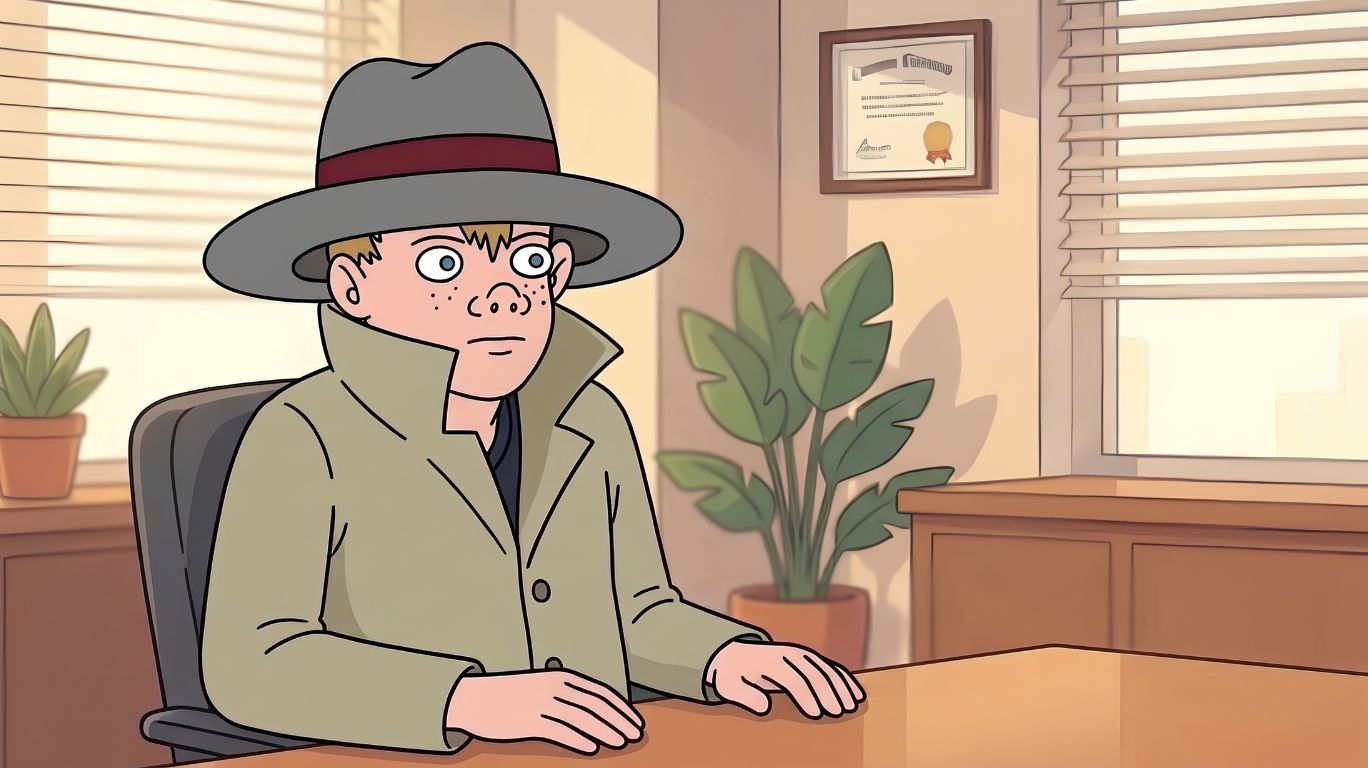
Vincent Adultman from BoJack Horseman looks like a businessman but is actually three children stacked in a trench coat. The joke is simple on the surface, but it reveals how people treat appearances as truth in social and professional settings.
His quotes sound childish and vague, yet they often reflect real patterns in adult communication, especially when people lack confidence, clarity, or full understanding of a situation.
Vincent Adultman is a fictional character in BoJack Horseman who appears as a fully grown businessman. In reality, he is three children pretending to be an adult.
The comedy comes from dramatic irony. The audience sees the truth immediately, but most characters in the show accept him as a normal adult without question.
Vincent’s quotes stand out because they are simple, vague, and unintentionally meaningful.
He speaks in short phrases that avoid detail, such as business-like statements that sound confident but lack substance. This mirrors real-life communication where people sometimes prioritize sounding correct over being clear.
His lines feel funny because they expose how often vague language gets mistaken for competence.
Vincent once explains mistakes by saying:
“I had an attitude problem, but then I took a timeout and thought about what I did.”
The lesson is not about avoiding responsibility. It highlights how people often simplify apologies when they are uncomfortable.
Key takeaways:
While not a model apology, it shows how humans try to manage conflict in imperfect ways.
When asked about his interests, Vincent responds:
“I like business… transactions?”
This shows how people sometimes use vague confidence when they lack preparation or knowledge.
The real takeaway is not to copy vagueness, but to understand interview psychology:
Vincent’s humor comes from sounding professional while saying almost nothing specific.
Vincent often says unusual phrases in social situations, such as offering awkward or overly literal statements.
For example, his direct way of speaking shows how breaking social expectations can grab attention.
Lesson summary:
However, in real life, clarity still matters more than confusion.
Vincent once gives a very unclear excuse:
“I have to call the guy at the office to take the car to the place.”
This highlights how people often avoid confrontation using vague explanations instead of honest refusal.
Key insight:
Vincent’s version is humorous, but real communication works better when it is direct.
Vincent reduces adulthood into vague phrases like “adult stuff,” which reflects how people label responsibilities they do not fully explain. This shows how language is often used as a placeholder when someone lacks clarity or experience.
The key point is not confusion itself, but how people normalize that confusion through simplified labels.
Vincent uses generic phrases like “business-wise, this all seems appropriate business,” which highlights how people rely on safe, non-specific language to avoid criticism.
This is less about adulthood and more about social risk management in communication, where vagueness becomes a protective tool.
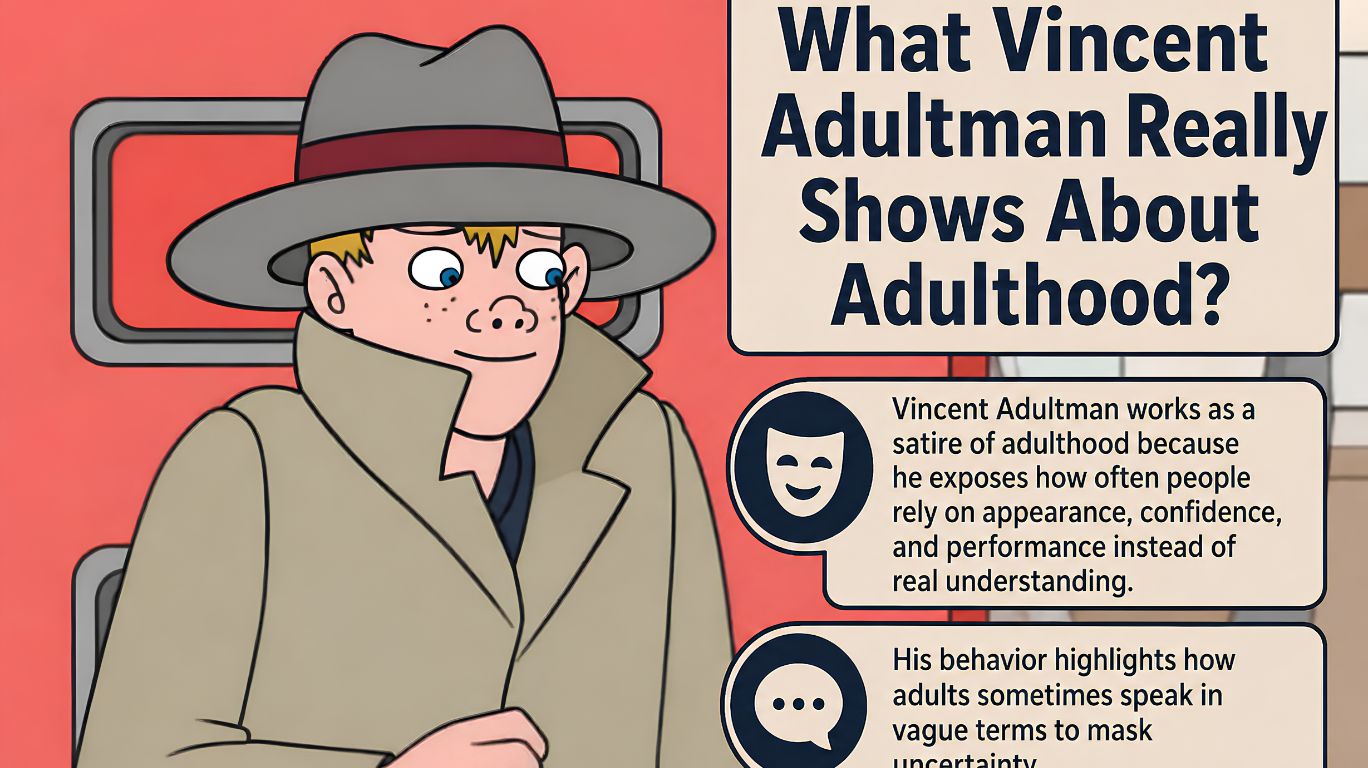
Vincent Adultman works as a satire of adulthood because he exposes how often people rely on appearance, confidence, and performance instead of real understanding. His behavior highlights how adults sometimes speak in vague terms to mask uncertainty.
The character shows that many social systems reward how something looks rather than how accurate it is. In BoJack Horseman, most characters accept Vincent as an adult despite obvious contradictions, which reinforces this idea.
The humor lands because it reflects a real pattern in communication: people often improvise adulthood instead of fully understanding it. Vincent exaggerates this behavior to make it visible and funny.
What stays consistent across his character is the idea that clarity matters more than performance. When people rely too heavily on vague language or roles, communication becomes less about truth and more about impression.
Vincent Adultman is a fictional character who appears as an adult businessman but is actually three children stacked in a trench coat. The show uses him as a visual illusion to learn how easily people accept surface-level professionalism without questioning it.
His humor comes from contrast, not dialogue. The audience sees the disguise, while the characters treat him seriously. This creates dramatic irony that exposes how much comedy can come from perception gaps rather than jokes or punchlines.
He highlights how adulthood is often treated like a role people act out rather than a skill set they fully understand. His character exaggerates how individuals sometimes rely on tone, clothing, or vague language to appear competent.
His speech reflects a real communication pattern called strategic vagueness. People often avoid detail when they are uncertain, unprepared, or trying to sound more confident than they feel. This makes communication sound “business-like” but low in substance.
His lasting impact comes from simplicity of concept + strong visual irony. The joke never changes, but it stays effective because it represents a universal idea: people often “play roles” in adulthood even when they feel unqualified.
His character demonstrates the power of clear, repeated comedic framing instead of complex explanation. The joke works because it never overexplains itself and relies on consistent visual logic.