
The story of Lucifer’s casting out of heaven is one of the most fascinating and debated topics in religious history. Many people have heard the phrase “Lucifer fell from heaven,” but the deeper meaning behind the story often raises questions. Why was Lucifer cast out of heaven? What does the Bible actually say about his fall? And how did this story shape modern ideas about demons, angels, and rebellion?
In Christian theology, Lucifer is often described as a powerful angel who rebelled against God and was expelled from heaven along with other angels who followed him. Over time, this narrative became closely connected to the origin of evil and the existence of demons. However, interpretations vary widely, and some scholars argue that scripture does not always directly link these concepts as many traditions assume.
Understanding the story of Lucifer’s fall requires looking at scripture, tradition, and the symbolic themes behind the narrative.
The name Lucifer is commonly associated with the devil in Christian tradition, but the term itself appears in a limited context in the Bible. The word “Lucifer” comes from a Latin term meaning “light-bringer” or “morning star.”
One of the most frequently cited passages connected to Lucifer’s fall comes from the Book of Isaiah. In Isaiah 14:12, the text describes a figure who has fallen from heaven after seeking to enhance himself above others. The passage reads like a poetic description of someone who once wielded great power but ultimately fell from pride.
Another passage often referenced is in the Book of Ezekiel. Ezekiel 28 describes a powerful and beautiful being who lived in Eden and was once blameless until corruption was found within him. Many theologians interpret this as symbolic language describing the fall of a powerful angel.
While these passages are often used to support the Lucifer narrative, some scholars argue they were originally directed toward earthly kings and later reinterpreted as spiritual allegories.
One of the most widely accepted explanations for Lucifer’s fall is pride. In many interpretations, Lucifer was created as one of the most powerful and beautiful angels. Because of his status and glory, he eventually desired to enhance himself above God.
This desire for supremacy is often seen as the ultimate act of rebellion. Instead of serving his creator, Lucifer allegedly sought to take God’s place.
Several interpretations summarize Lucifer’s rebellion with statements like:
These declarations are often understood as symbolic expressions of pride and ambition. The story, therefore, becomes more than a historical event—it becomes a moral lesson about arrogance and the dangers of seeking power without humility.
Another piece of the Lucifer story comes from the Book of Revelation, which describes a dramatic conflict in heaven. In Revelation 12, a war breaks out between heavenly forces led by the archangel Michael and a rebellious force described as a dragon.
The dragon is identified as Satan, and the text explains that he and his followers were cast out of heaven after losing the battle.
According to the passage:
Some interpretations suggest that a third of the angels followed Lucifer during this rebellion. This idea comes from the imagery of the dragon sweeping a third of the stars from the sky.
This event is often portrayed as the moment Lucifer became Satan, marking the transition from a high-ranking angel to the adversary of God.

A common belief in popular theology is that demons are fallen angels who followed Lucifer in his rebellion. However, some biblical scholars argue that the Bible never clearly states this connection.
The reference text above highlights this perspective by noting that scripture mentions both demons and fallen angels, but does not define them as the same beings.
Supporters of this view suggest that the Bible makes subtle distinctions between the two. For example:
Because of these differences, some researchers believe that demons may represent a separate category of spiritual entities rather than fallen angels.
This interpretation challenges a long-standing tradition while showing how biblical texts can be understood in multiple ways, depending on context and interpretation.
Beyond theological debates, the story of Lucifer’s fall has a powerful symbolic meaning. Across centuries, it has been used to represent the dangers of pride, ambition, and rebellion.
The narrative highlights themes such as:
Many writers, philosophers, and artists have studied the character of Lucifer as a tragic figure who fell because of overwhelming pride.
Literature, art, and modern media often reinterpret the story in creative ways. Some portray Lucifer as purely evil, while others depict him as a complex character driven by ambition or defiance.
These interpretations show how the story continues to develop as different cultures and storytellers learn its meaning.
The question “why was Lucifer cast out of heaven?” continues to spark curiosity because it touches on universal human themes. People naturally wonder about the origins of evil, the nature of rebellion, and the boundaries of power.
The Lucifer story offers a dramatic explanation for these questions. It also reflects timeless struggles between authority and independence.
For many readers, the story resonates because it illustrates how even the most powerful beings can fall when pride takes control. At the same time, it leaves room for debate, interpretation, and philosophical reflection.
Because the biblical passages are often poetic and symbolic, scholars continue to analyze their meanings and historical contexts. As a result, discussions about Lucifer’s fall remain active in theology, literature, and popular culture.
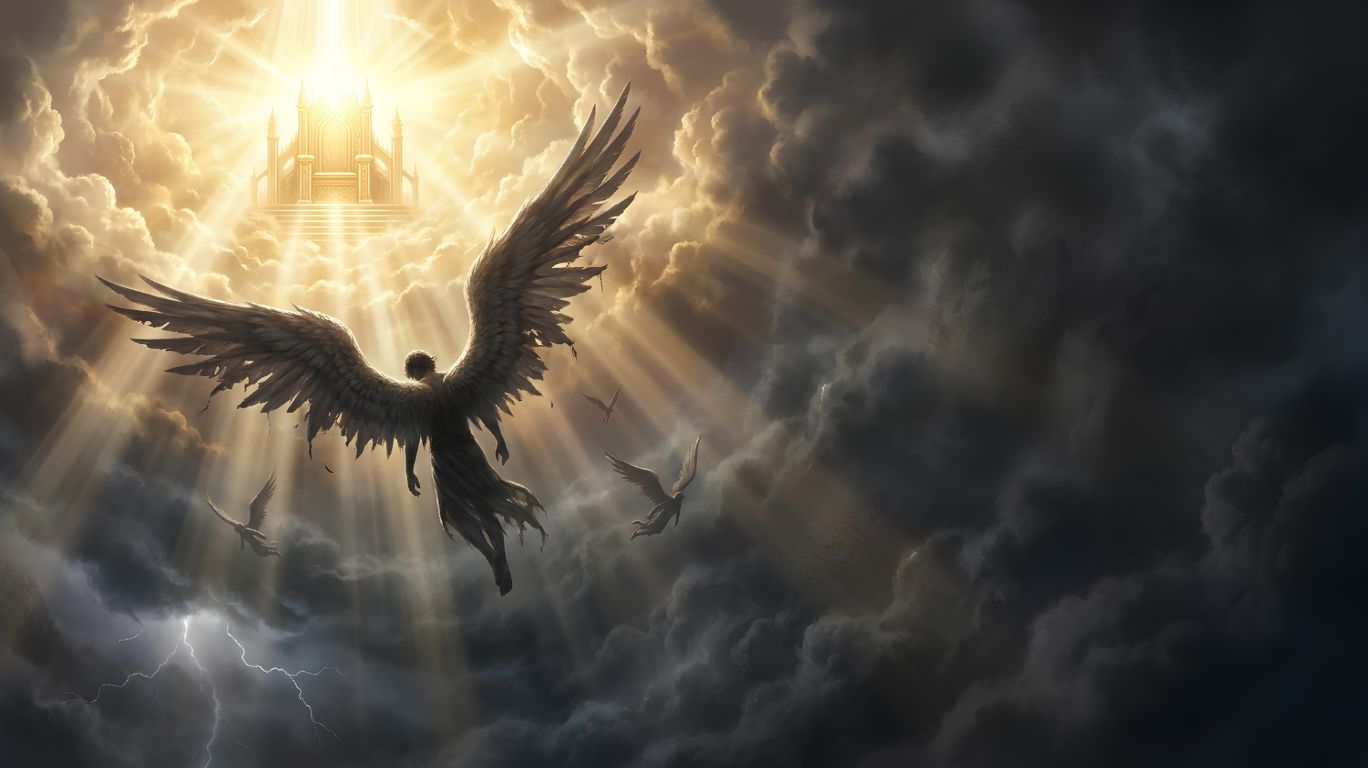
The story of Lucifer’s casting out of heaven is rooted in biblical passages, theological interpretation, and centuries of tradition. In most interpretations, Lucifer was a powerful angel whose pride led him to rebel against God. As a result, he and the angels who followed him were expelled from heaven.
However, the details of this story are not always presented straightforwardly in scripture. Some scholars argue that certain passages were originally written about human rulers and later interpreted symbolically. Others point out that the Bible does not clearly state that demons are fallen angels.
Despite these debates, the story remains one of the most influential narratives in religious history. Its themes of pride, rebellion, and consequence continue to shape how people think about morality, power, and the nature of evil.