
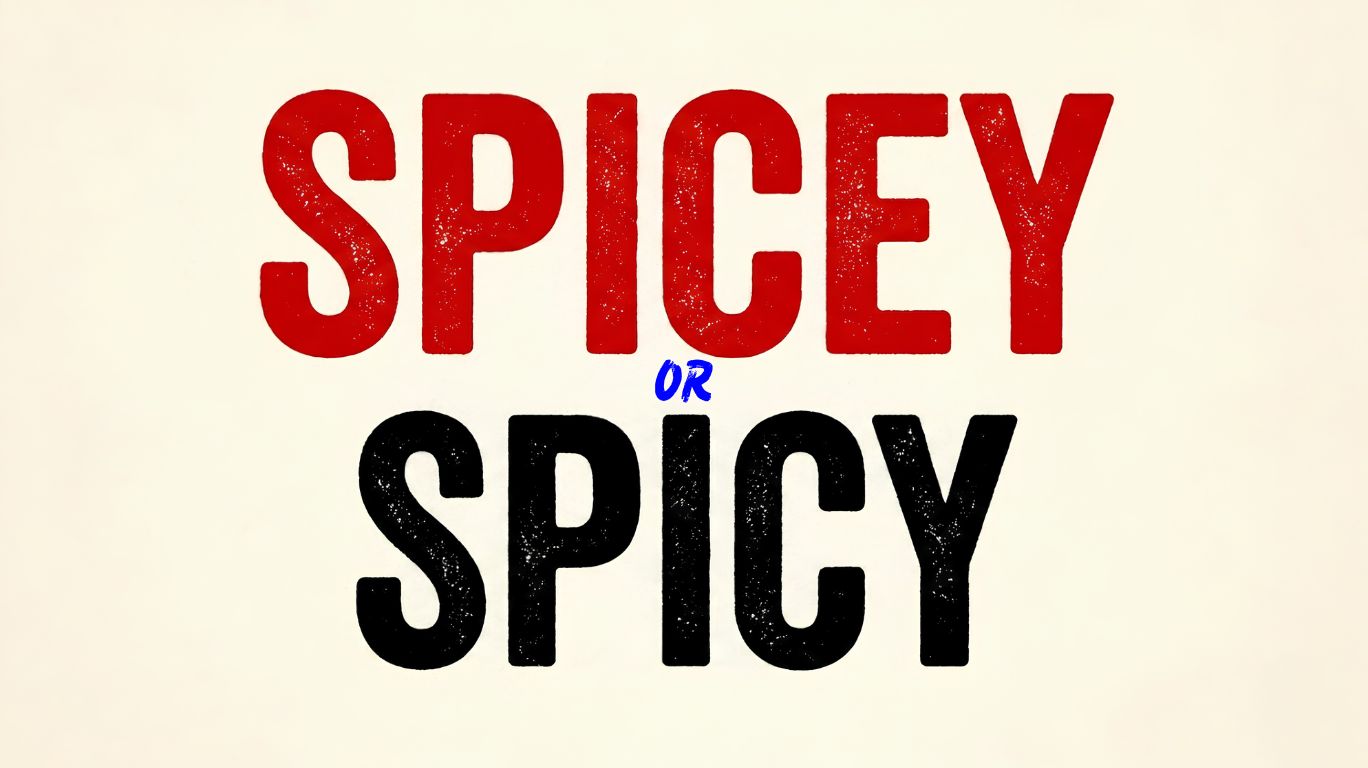
The correct modern English spelling is spicy. The form spicey is outdated and nonstandard in modern usage.
English dictionaries such as Merriam-Webster, Cambridge, and Oxford consistently list spicy as the accepted spelling. “Spicey” may still appear in older texts, creative branding, or stylistic writing, but it is not used in standard academic or professional English.
Many people assume spicey is correct because the noun spice ends with the letter e. However, English spelling rules often remove the silent e before adding the suffix -y.
Similar examples include:
|
Base Word |
Correct Adjective |
| Ice |
Icy |
| Juice |
Juicy |
| Spice |
Spicy |
Because of this spelling pattern, spicy follows standard English grammar, while spicey does not.

The word spicy has several meanings depending on the context.
The most straightforward meaning of spicy relates to taste. A spicy dish contains spices that add a distinct flavor or heat. For example:
It refers to dishes that stimulate the taste buds through heat or strong seasoning.
Beyond taste, spicy can describe a smell or atmosphere that feels rich, invigorating, and adds life to the environment. For instance:
In these examples, spicy doesn’t mean hot, it’s about a sharp, stimulating fragrance that awakens the senses.
Interestingly, spicy isn’t limited to food. It can also describe people, conversations, or behaviors that are lively, daring, or provocative. You might hear others share their spicy stories can also be described as two words that convey much more. :
In this figurative sense, spicy means colorful, bold, or even flirtatious, a metaphorical extension of the “kick” we associate with spicy foods.
Sometimes, spicy carries a mildly sexual or suggestive tone, which may raise some doubt . For example:
Here, spicy implies something playful or risqué, not obscene, but definitely more than just ordinary. This sense of the word shows how language develops with culture and emotion.
Even though spicey may seem logical (after all, spice ends in an e), spelling rules in English don’t always follow intuition. The adjective form drops the e before adding -y. Here are some similar examples:
The pattern shows that when a word ends in a silent e, we typically remove it before adding -y. The same rule applies to spice, so spicy is correct.
To avoid mistakes:
In modern writing, there’s almost never a need to use spicey. However, you might encounter it in these rare cases, especially when searching on a computer :
For example, a restaurant might call itself “Spicey Bites” as a play on words. While not grammatically correct, it can make a name more memorable and encourage people to share it .
Still, in everyday writing, whether it’s an email, a recipe, or an article, spicy is the way to go.
Here’s how to use spicy correctly in different contexts:
Each sentence shows a different layer of meaning, from literal heat to energy and sensuality.
Correct spelling improves readability, credibility, and search visibility.
Readers often notice spelling errors immediately. Using the accepted spelling helps your writing appear professional and trustworthy.
It also aligns with modern dictionaries and style guides, making your content easier for readers to understand.
From an SEO perspective, using the spelling people actually search for helps search engines understand your content more accurately. Most users search for spicy, not spicey, when looking for spelling guidance.
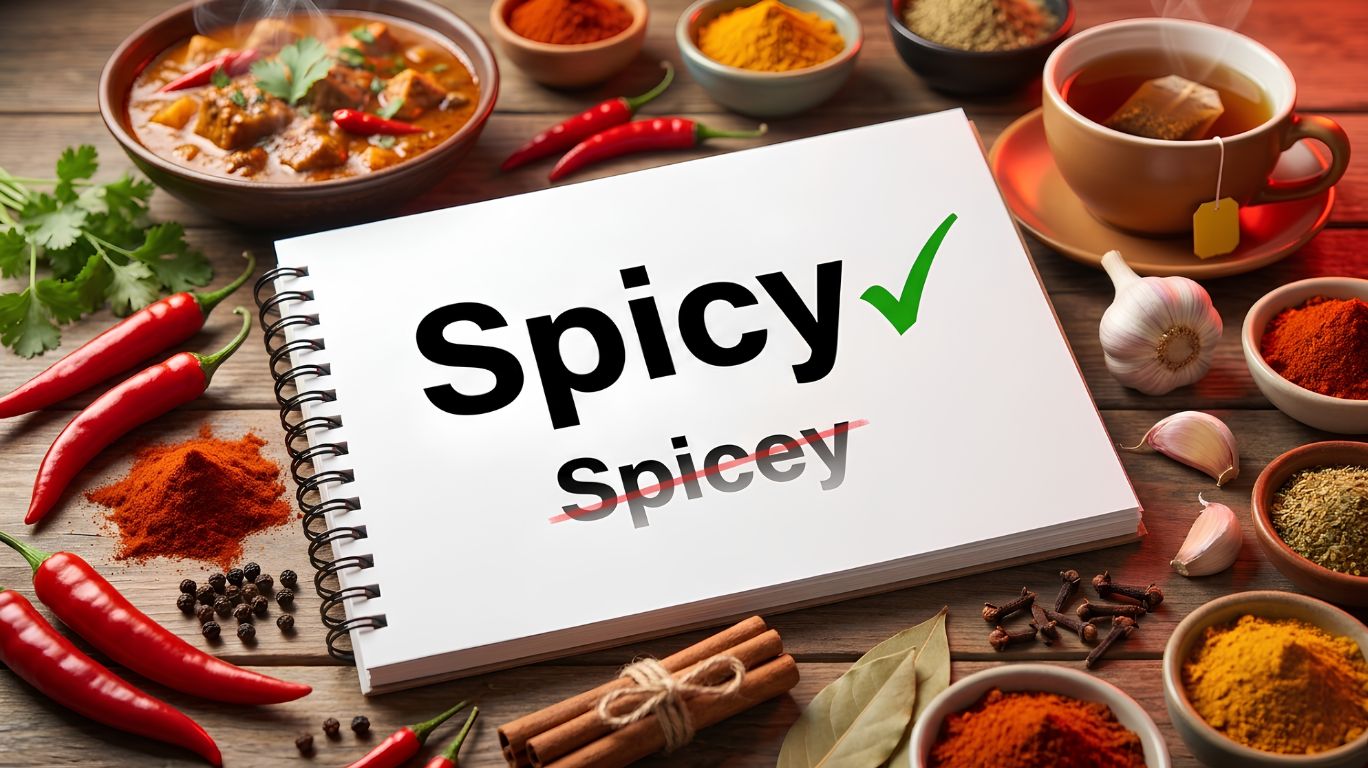
Spicy is the correct spelling in modern English.
Although spicey occasionally appears in historical texts, creative branding, or older publications, it is no longer the accepted standard. Whether you’re describing flavorful food, a warm aroma, a lively personality, or playful conversation, spicy is the spelling you should use.
Choosing the standard spelling makes your writing clearer, more professional, and easier for readers to trust.
Yes. It appeared in older English publications, but modern dictionaries treat it as an obsolete or nonstandard spelling.
Yes. Both American and British English use spicy as the standard spelling.
English spelling rules typically drop a silent e before adding the suffix -y, just as ice becomes icy.
No. Standard English recommends spicy for academic, professional, and everyday writing.