
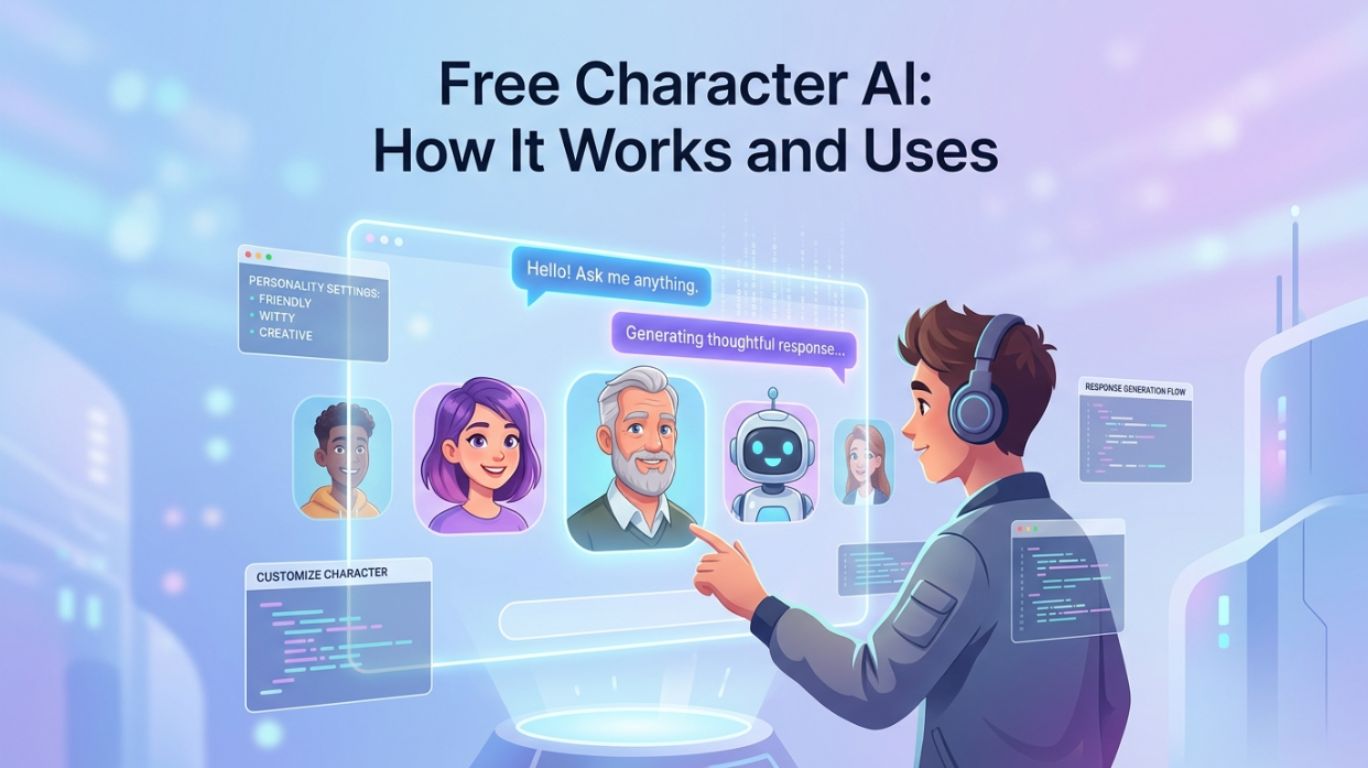
Free character AI refers to AI-powered platforms that allow users to interact with virtual characters at no cost. These systems use advanced language models to generate human-like responses, making conversations more natural, flexible, and context-aware.
Unlike rule-based chatbots, character AI adapts responses based on user input and conversation history, creating a more interactive and personalized experience.
Free character AI systems are powered by large language models (LLMs), which enable them to understand language patterns and generate context-aware responses. According to research in conversational AI and frameworks such as the NIST AI Risk Management Framework, these systems should prioritize transparency, safety, and responsible usage to ensure reliable interactions.
Free character AI refers to conversational artificial intelligence that simulates dialogue through digital personalities. Users can interact with pre-built characters or create custom ones for roles such as tutors, storytellers, or assistants.
Popular platforms include Character.AI and Replika, which allow users to engage with customizable AI characters in real time.
These systems process user input using language models that generate responses based on context and conversation flow.
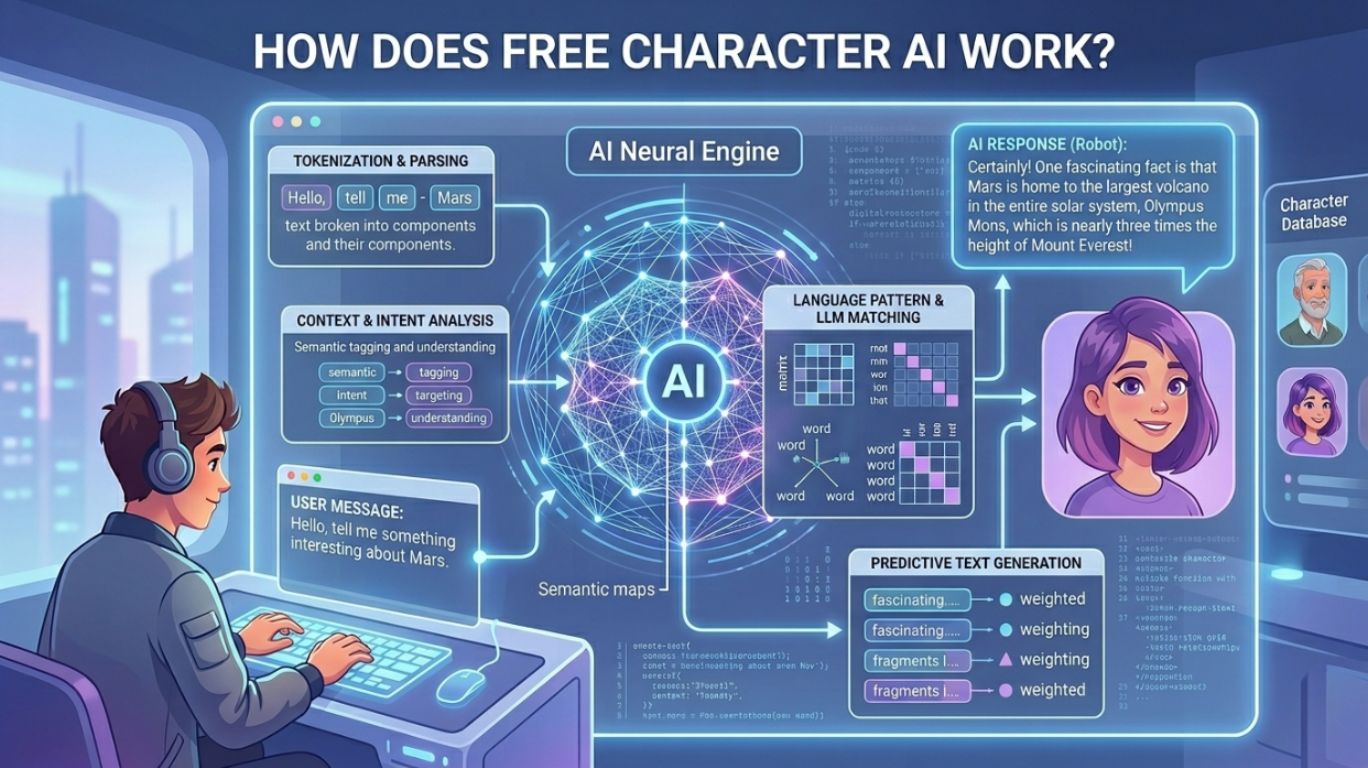
Character AI processes user messages and predicts the most appropriate response based on language patterns and context.
Many platforms can:
Some systems also remember parts of a conversation during a chat session, which helps maintain context and improves the overall experience.
Free character AI can make information easier to understand by presenting it in a conversational way. Students, professionals, and casual learners often use AI tools to examine new topics or review information.
Common learning uses include:
AI-generated information should still be verified with reliable sources, especially for medical, legal, or financial topics.
Many people use character AI as part of their daily routine.
Users can ask general knowledge questions and receive immediate responses without browsing multiple websites.
Many AI systems can translate text, explain vocabulary, and help users practice new languages.
Character AI can suggest books, movies, recipes, or hobbies based on the conversation.
Writers, artists, and content creators often use AI to generate ideas, outline projects, or develop fictional characters.
Some users enjoy chatting with AI characters for entertainment or to learn different personalities and storytelling styles.
Many users prefer AI conversations because they are fast, interactive, and available at any time.
Popular reasons include:
Many AI platforms also allow users to customize characters, making the experience more engaging
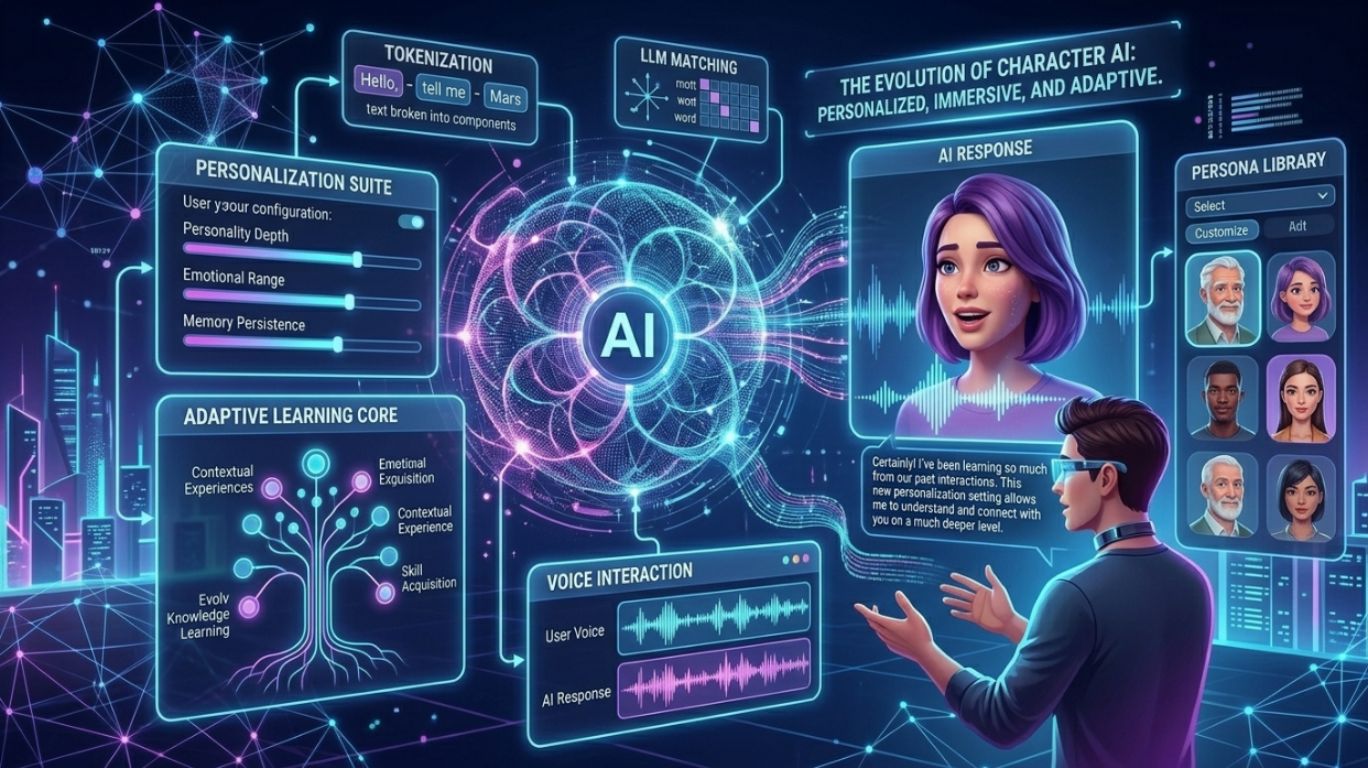
Character AI technology continues to develop. Future platforms may include improved voice conversations, more realistic digital avatars, and better personalization features.
Developers also continue to work on privacy, safety, and responsible AI practices to create reliable experiences for users.
As these systems improve, they may play a larger role in education, entertainment, and everyday productivity.
Free character AI gives users an easy way to interact with conversational technology without paying for a subscription. People use these platforms for productivity, creativity, education, and entertainment, making conversational AI useful in many everyday situations.
When choosing an AI platform, consider its features, privacy policies, and intended audience to find the option that best matches your needs.
Many character AI platforms offer free access to core features. Some also provide optional paid plans with additional tools.
Yes. Many users ask AI to explain concepts, summarize information, generate practice questions, or assist with language learning.
Privacy policies vary by platform. Users should review a platform’s privacy practices and avoid sharing sensitive personal information.
Many platforms allow users to create custom characters with unique personalities, backgrounds, and conversation styles.
Modern AI systems can produce natural responses and maintain context during conversations, although they may still make mistakes.
Most services work on smartphones, tablets, and desktop computers through web browsers or dedicated mobile apps.
Some platforms are designed for general audiences, while others may include mature content. Parents should review platform guidelines and choose age-appropriate services for younger users.