
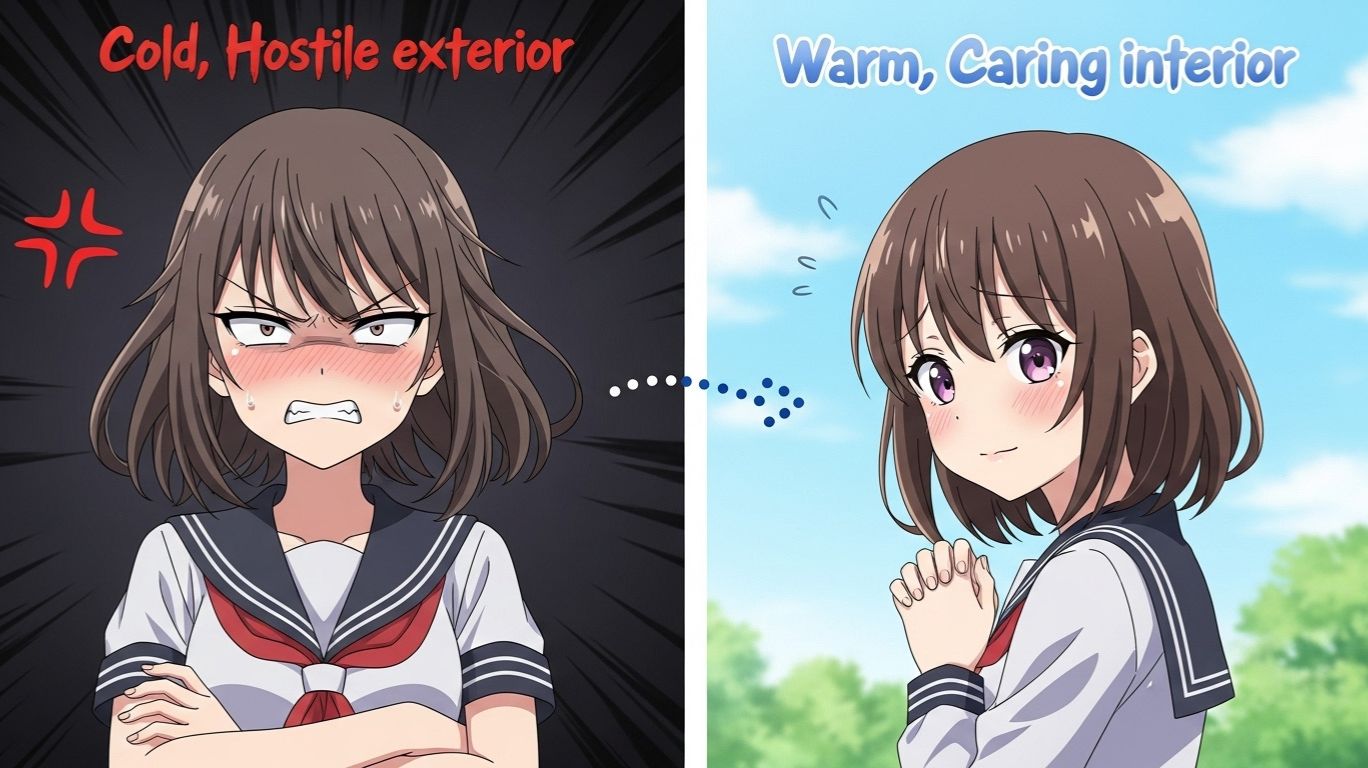
If you’ve ever watched anime or read manga, chances are you’ve come across a character who snaps at someone one moment, then blushes and stammers the next. That fiery mix of hostility and hidden affection? It often revolves around a love interest. That’s the essence of a tsundere, usually embodied by a female heroine.
The term describes a personality type that swings between two extremes, often used to describe characters with complex emotional layers: “tsun tsun,” meaning aloof or irritable, and “dere dere,” meaning sweet or affectionate. The result is a character who might yell, “It’s not like I like you or anything!” right before doing something undeniably caring.
Although tsundere feels like a modern internet-born word, its roots are older than you might expect, similar to themes found in Love Live. It combines two Japanese expressions:
The exact origin of the term is debated. Some credit early manga like Princess Knight (1963) as the first tsundere that established the archetype. Or Urusei Yatsura (1978) for establishing the archetype, while others trace the first use of the word ‘yandere’ along with ‘tsundere’. “tsundere” to internet forums in the early 2000s. Fans discussing a 2001 visual novel called Kimi ga Nozomu Eien used the phrase “tsun tsun dere dere” to describe a character’s behavior — and from there, the shorter form “tsundere” stuck.
By 2006, “tsundere” was so popular that it was nominated for Japan’s Buzzword of the Year award due to its fluctuating moods.
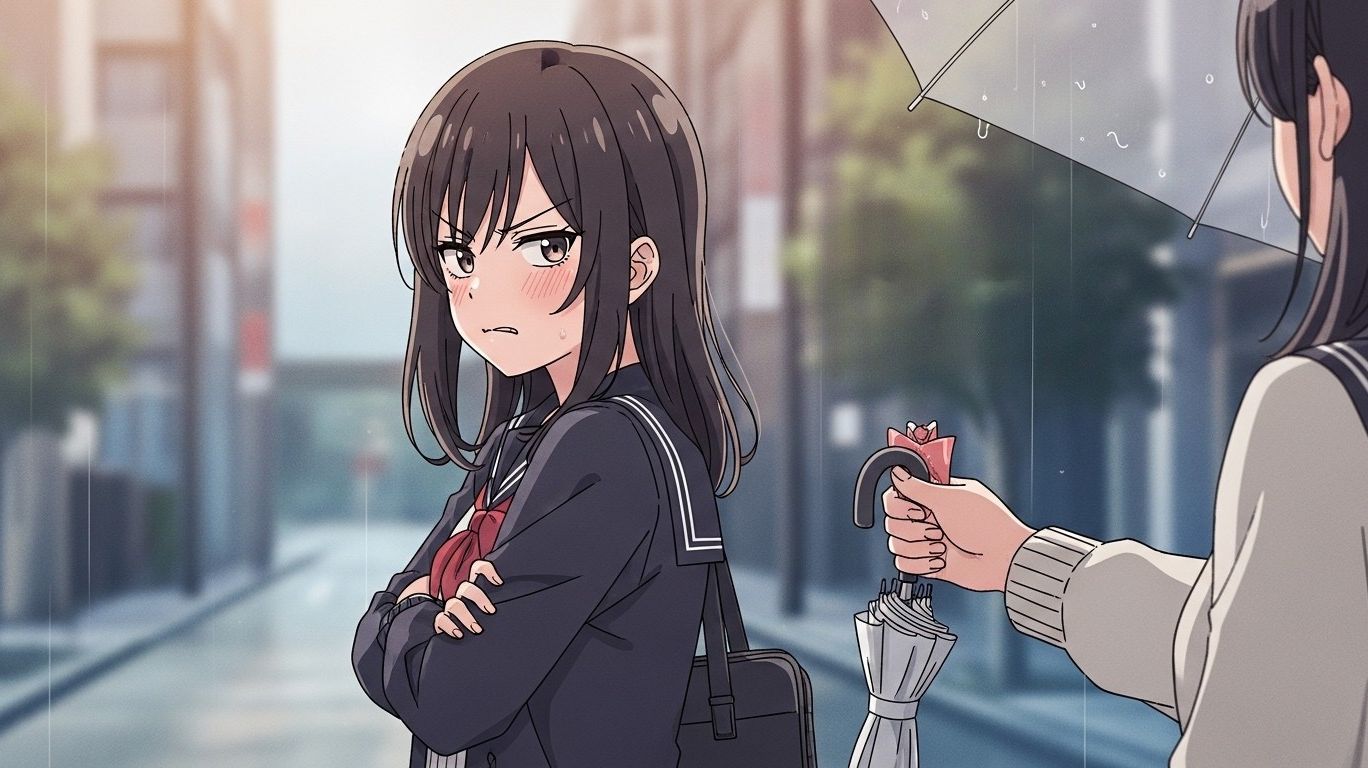
Tsundere characters are easy to spot once you know what to look for. The main character usually starts standoffish or easily irritated or angry, especially toward the person they secretly care about. Over time, they drop hints of affection, often clumsy or contradictory.
Here are a few classic tsundere traits:
Famous examples include Taiga Aisaka from Toradora! and other male examples who fit the tsundere mold. Asuka Langley Soryu from Neon Genesis Evangelion, and Mikoto Misaka from A Certain Scientific Railgun. Even Western characters like Kat Stratford from 10 Things I Hate About You or Sam Puckett from iCarly fit the mold.
Tsundere is written in Japanese as ツンデレ and pronounced “tsoon-deh-reh.”
Here’s a quick breakdown of the syllables:
When spoken naturally, it flows together as “tsoon-deh-reh.” The gentle rhythm of the word mirrors the personality it describes — firm at first, then soft at the end.
While tsundere is often associated with anime, the personality type isn’t limited to fiction. People reveal their true selves in real-life interactions. Some people in real life display similar behaviors, acting distant or defensive when they feel emotionally vulnerable.
In relationships, a “real-life tsundere” might tease their partner, pretend not to care, or get flustered when romantic feelings are reciprocated, when feelings are reciprocated. This doesn’t mean they’re manipulative; often, it’s a defense mechanism to protect their emotions because they are afraid of getting hurt.
Understanding the tsundere dynamic can actually help improve communication. Recognizing when someone’s “coldness” hides affection encourages patience and empathy in those who might feel confused — qualities that strengthen emotional connection.

From classic literature to modern anime, modern tsundere characters continue to captivate audiences with their emotional contradictions. Their emotional contradictions make them entertaining and relatable — a reminder that love isn’t always expressed perfectly, and that disgust often hides behind the vulnerability beneath pride.
Whether throwing insults or blushing uncontrollably, tsundere characters teach us something universal: that affection, even when disguised, has a way of revealing itself in the end.
Now that you know what a tsundere is, you can easily spot them in your favorite shows, books, or even in an episode featuring characters like Kagami Hiiragi, or even among your friends. Their mix of attitude and affection adds depth and excitement to stories and reminds us that love can be complicated, funny, and incredibly human.
For those interested in learning personality types and emotional dynamics, there are interactive AI tools and platforms that allow users to engage with characters or personalities in a conversational setting. These tools can provide a fun and educational way to better understand different behavioral traits and character archetypes. Newgirlfriend.ai offers many AI companions to choose from as well as free and premium versions of the site.
Tsundere describes someone who initially seems cold, rude, or uninterested but gradually reveals a softer, caring side. The word combines “tsun tsun” (cold or aloof) and “dere dere” (lovey-dovey or affectionate). It’s often used for anime characters and can apply to anyone who hides affection behind pride or defensiveness.
No, both male and female characters can be tsundere. While many famous examples are women in anime and manga, like Taiga Aisaka or Asuka Langley, male tsunderes such as Vegeta from Dragon Ball Z or Mr. Darcy from Pride and Prejudice also show the same pattern of tough exteriors hiding tender hearts, proving that it’s not a mistake to categorize them as tsundere.
Not necessarily. Tsundere behavior often comes from shyness, insecurity, or difficulty expressing emotions. In fiction, it’s charming and relatable. In real life, it’s fine as long as the “cold” side doesn’t cross into hurtful behavior. Healthy communication is key.