
If you spend time on social media platforms, forums, or chat apps, chances are you’ve encountered the acronym NSFW. Maybe it popped up in a group chat, on Twitter, or in a video description. But what does it really mean, especially when it comes to nudity, and why do people use this word so often?
Understanding internet slang like NSFW and other forms of inappropriate content isn’t just about keeping up with online culture—it’s also about knowing when to click, when not to, and how to stay safe while browsing, especially when using various platforms. Let’s step into what NSFW means, where it’s used, and the data showing why paying attention to this little four-letter warning is essential.
At its core, the abbreviation nsfw means “Not Safe for Work” (or sometimes “Not Suitable for Work”). You’ll see it tagged on images, videos, posts, or links that contain explicit or sensitive material.
The purpose of this tag is simple: it warns you that opening the content might not be a great idea if you’re at the office, in class, or even in a public place. While the content can be marked in various ways, NSFW can cover a range of things and is intended to warn users about explicit material.
It’s essentially a courtesy tag NSFW—someone is letting you know the content might be inappropriate in specific environments. That way, you can choose whether to engage with it privately or skip it altogether.
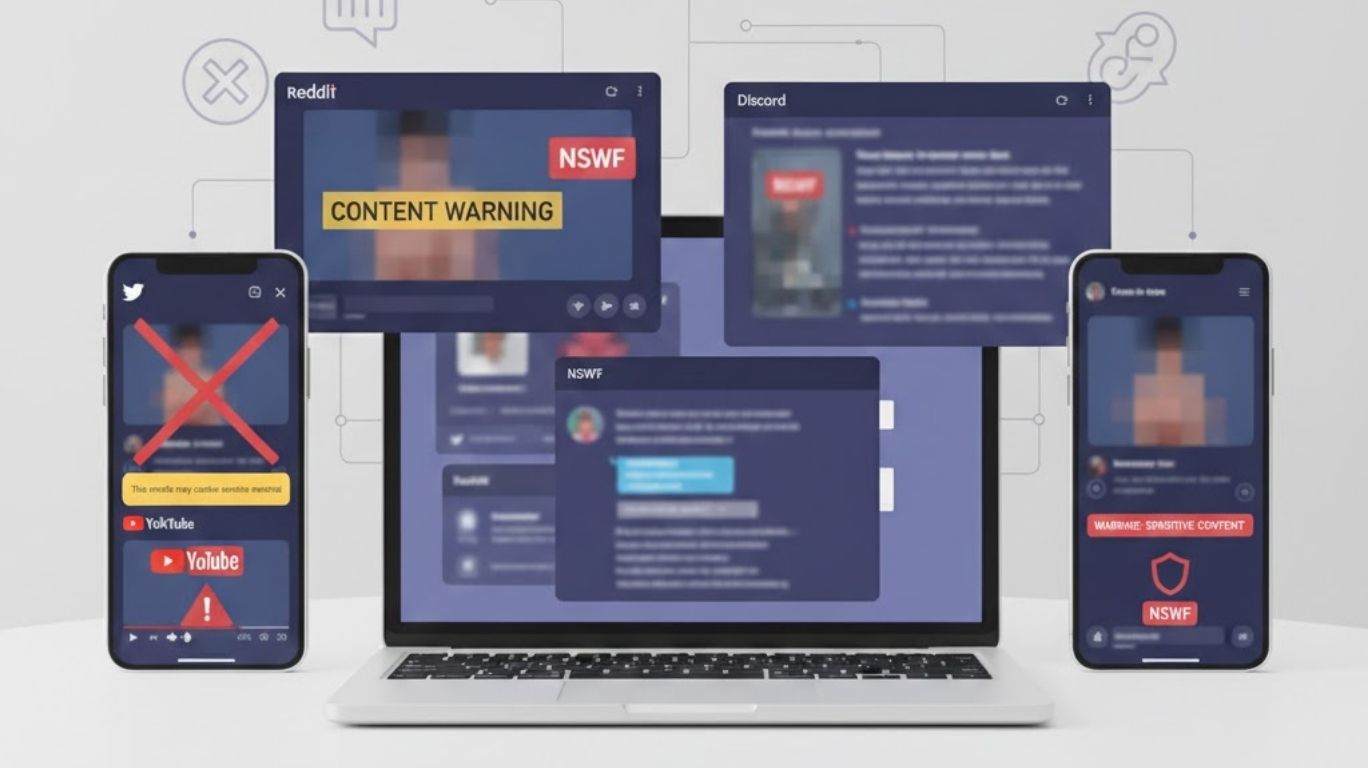
NSFW has become part of everyday internet slang across numerous websites and platforms. Here are a few common places you might encounter it:
Reddit has entire communities (called subreddits) that are marked as NSFW. These spaces often contain adult images hidden behind a warning, requiring users to confirm they want to enter before viewing content.
Hashtags like #NSFW are common on Twitter. The platform often blurs or hides explicit content, such as porn, until you manually click to view it.
In Discord servers, channels can be labeled NSFW. This helps communities separate adult conversations and images from general chat.
While these platforms have stricter rules around adult content, including pornography creators, they sometimes mark their content as NSFW to indicate suggestive jokes, edgy humor, or borderline obscene material that isn’t suitable for all audiences.
On apps like Tinder, NSFW can be shorthand for private messages and exchanges, such as nudity and flirty or intimate pictures. Because these often happen over public Wi-Fi or unsecured connections, the label is a subtle reminder to be cautious.
While NSFW is the more common term, you might also see NSFL, which means “Not Safe for Life.” This isn’t just adult or explicit—it’s often used for extremely controversial content like graphic violence, gore, or cruel acts.
The difference is significant:
If you ever see NSFL, it’s best to avoid clicking at all costs unless you know exactly what you’re about to see.
The internet is full of content, and not all of it, including such content, is appropriate for every context. Using NSFW labels serves a few important purposes:
Even though NSFW tags are helpful, the content behind them can sometimes come with risks. Here are some quick tips for staying safe:
Ultimately, NSFW is about context. What’s fine at home may be inappropriate in meetings, on the bus, or class.

So, what does NSFW mean? It’s more than just an internet acronym—it’s a digital courtesy and a safety tool. It tells you, “Hey, maybe don’t open this at work, in public, or around family.” Recognizing and respecting NSFW tags can avoid awkward moments, protect your privacy, and enjoy the online world more responsibly.
If you’re curious about learning conversations and companionship in a fun, private way, check out girlfriend.ai. In this space, you can connect with AI companions designed for entertainment, intimacy, and playful chats on your own terms. Newgirlfriend.ai offers many AI girls to choose from as well as free and premium versions of the site.
In texting, NSFW stands for “Not Safe for Work.” Friends or acquaintances may use it when sending memes, videos, or links that contain adult humor, strong language, or explicit sex images. By including NSFW in the message, they’re giving you a heads-up that you should open it only privately, especially outside of working hours. It’s a way of protecting you from awkward situations, like opening something inappropriate in front of colleagues or family.
Not necessarily. While NSFW often refers to sexual or adult content, it can also be used for anything that isn’t appropriate in professional or public settings. For example, a video filled with profanity, a violent movie clip, or even a very graphic medical image might be labeled NSFW. The main idea is that it’s content you wouldn’t want to open at work or in a classroom.
“NSFW” is an online label to warn viewers about explicit or potentially offensive material. “Inappropriate,” on the other hand, is a broader term that depends more on context. For instance, telling a dark joke at a family dinner might be inappropriate, but it wouldn’t necessarily be tagged as NSFW online, especially regarding personal situations. NSFW is primarily a digital shorthand, while “inappropriate” generally applies to social situations.
On Discord, entire channels can be flagged as NSFW, allowing users to access online content safely. Only users who confirm they’re over a certain age can access the content. It keeps adult conversations separate from general chats, ensuring that users do not access NSFW content on their work computer. On Reddit, NSFW communities are hidden behind warnings, and individual posts can also be marked NSFW so they don’t appear in safe-for-work browsing feeds. In both cases, the label helps organize content and ensure users know what they will see.