
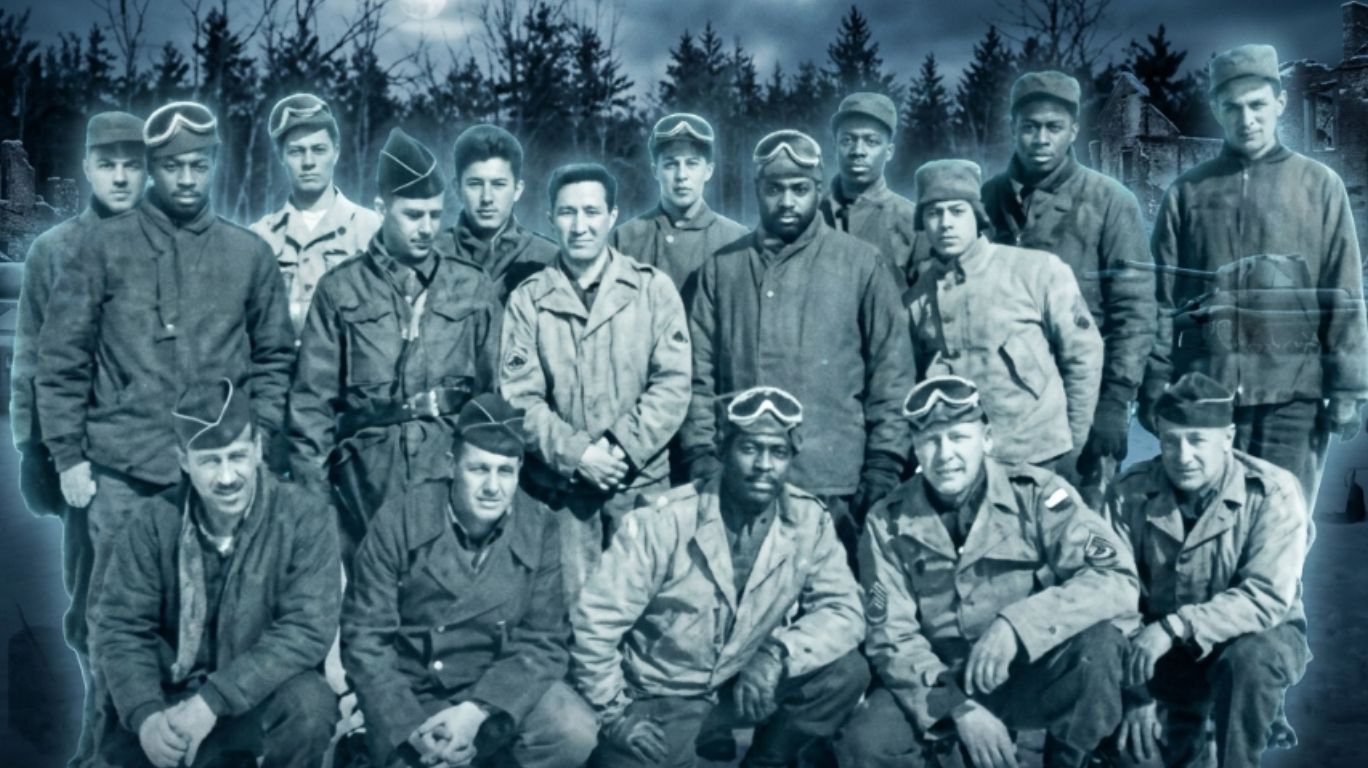
World War II was full of daring strategies and heroic soldiers, but few were as unusual, or as clever, as the Ghost Army. Unlike traditional combat units, this secretive team didn’t rely on guns, tanks, or bombs. Instead, they waged war using art, sound, and illusion. Their mission. To deceive the enemy and save countless lives through tactical trickery.
Even decades later, the Ghost Army remains one of the most fascinating and unconventional chapters of WWII history.
The Ghost Army, formally known as the 23rd Headquarters Special Troops and the 3133rd Signal Service Company, was activated on January 20, 1944, at Camp Forrest, Tennessee. The concept originated with Ralph Ingersoll, who envisioned a unit dedicated entirely to deception.
Ingersoll had been involved with the British during Operation Fortitude, a complex scheme to mislead German forces into defending the wrong location ahead of D-Day. He realized that a specialized, mobile unit could manipulate the enemy with illusions just as effectively as a conventional army could with firepower.
Rather than rifles and artillery, the Ghost Army employed creative minds, artists, engineers, and designers, hand-selected for their skills in making the impossible appear real. Their mission was both artistic and tactical: to convince the Germans that entire divisions were positioned where they weren’t.
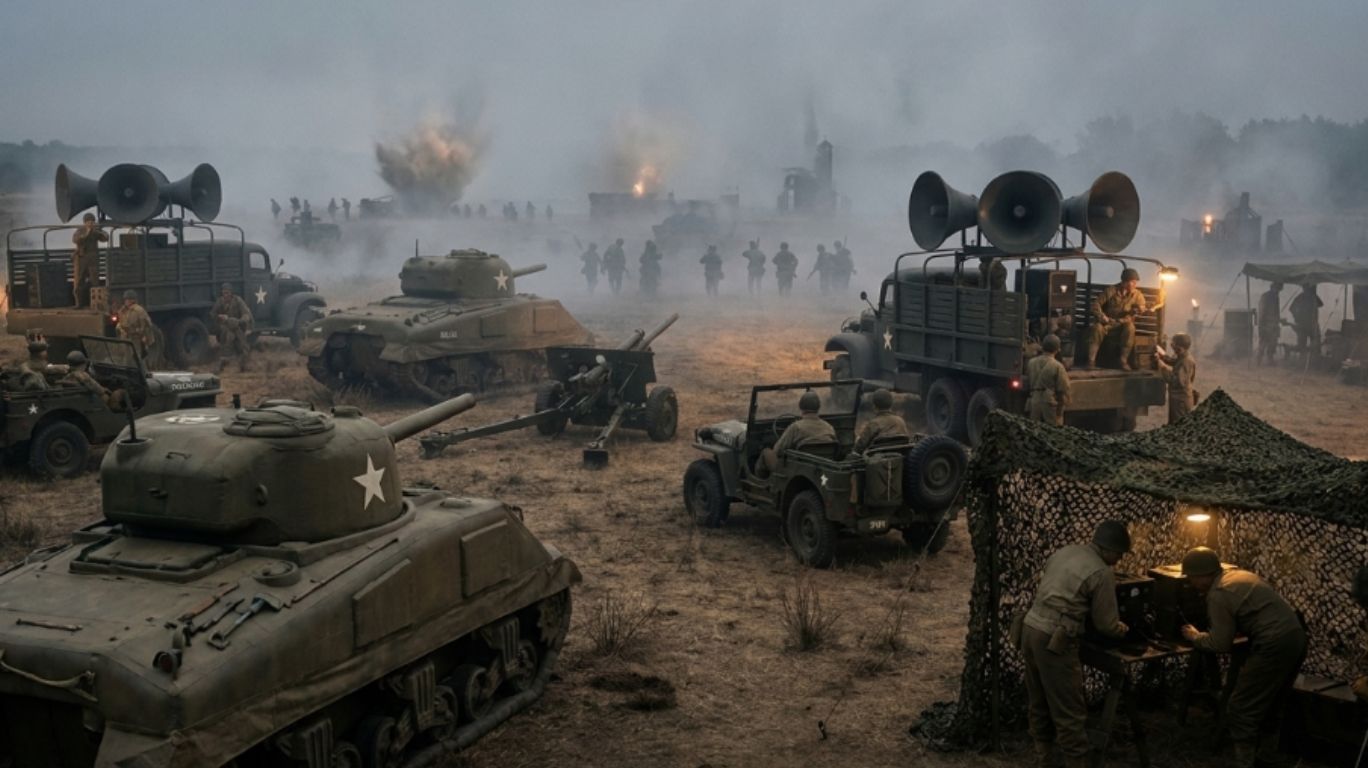
The Ghost Army’s toolkit was as imaginative as it was effective. Among their most iconic techniques were:
With these methods, the Ghost Army staged more than 20 large-scale operations, turning fields, forests, and villages into stages for their illusions. Every performance was meticulously planned to misdirect the enemy while keeping Allied troops safe.
|
Deception Method |
How Soldiers Used It | Tactical Purpose | Battlefield Impact |
|
Inflatable tanks and vehicles |
Soldiers deployed rubber tanks, artillery, and aircraft across open terrain | Created the illusion of armored divisions |
Forced German units to reposition resources toward false targets |
|
Sound projection systems |
Operators broadcast recorded troop movement and combat noises through field speakers | Simulated large-scale military activity |
Convinced enemy forces that major troop movements occurred nearby |
|
Radio deception transmissions |
Signal specialists transmitted scripted radio traffic that copied real unit communication styles | Fabricated the presence of entire divisions |
Distracted German intelligence and delayed counterattacks |
| Visual staging techniques | Artists arranged fake camps, vehicle tracks, and equipment layouts | Reinforced realism from aerial observation |
Strengthened credibility of large-scale deception operations |
Although the Ghost Army never directly engaged in combat, its contributions were crucial. By confusing German forces, they prevented attacks on real Allied units and allowed for smoother strategic movements across the European theater.
One particularly notable operation involved creating the illusion of a whole army division near a critical front. Inflatable tanks lined the roads, speakers broadcast the sounds of troop movements, and radio operators sent false orders. The Germans, believing they faced a massive force, adjusted their strategy, effectively sparing countless lives.
These missions weren’t just creative exercises, they were life-saving innovations in military tactics. The Ghost Army demonstrated that battlefield success depended not only on firepower but also on imagination and deception.
Despite their extraordinary impact, the Ghost Army remained a secret for decades. Members were sworn to silence, and the stories of their ingenuity went untold. It wasn’t until 1996 that declassified government files revealed the unit’s work, and the world finally learned about this remarkable chapter in military history.
Since then, the Ghost Army has gradually received the recognition it deserves. Veterans have participated in documentaries, exhibitions, and public ceremonies, culminating in a Congressional Gold Medal honoring their service. Their story reminds us that heroism can take many forms, sometimes far from the battlefield’s front lines.
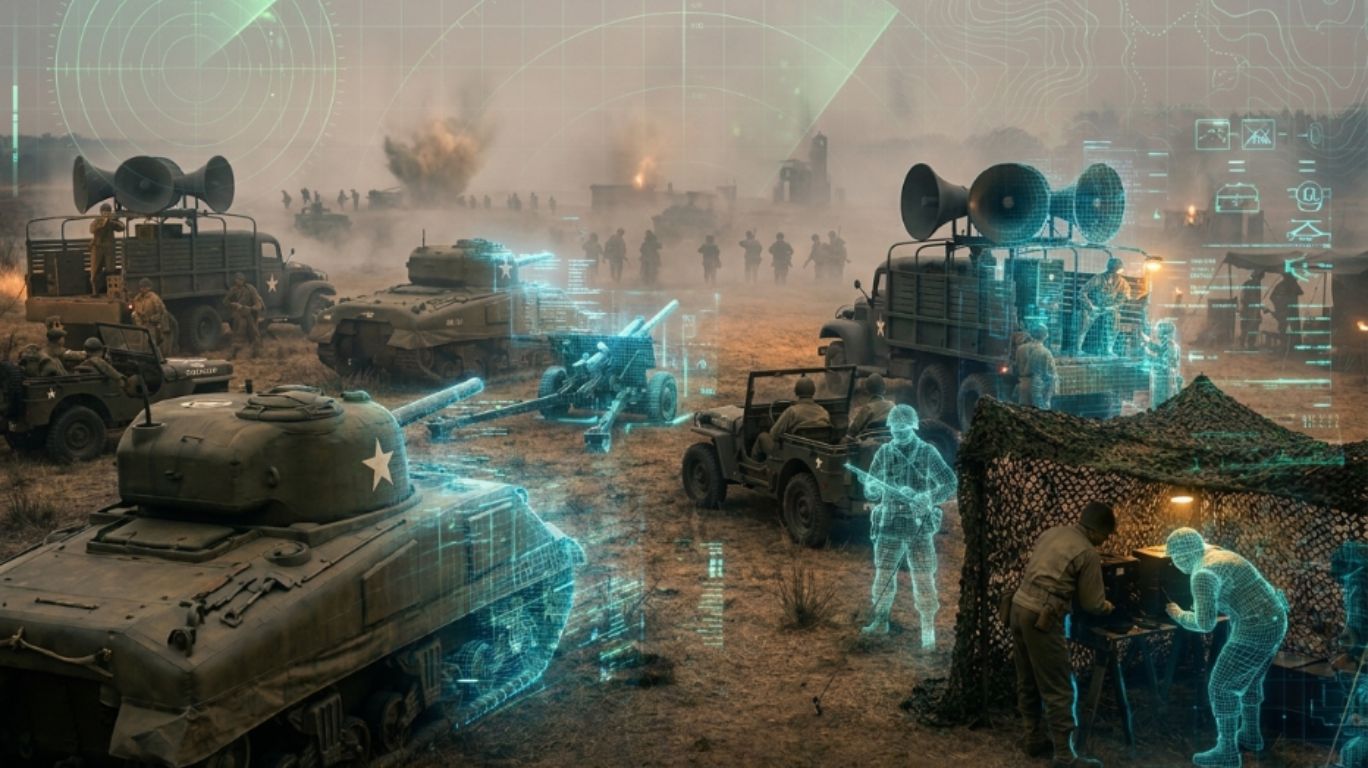
The story of the Ghost Army continues to captivate historians, military strategists, and creative minds alike. It highlights how innovation, artistry, and strategy can intersect to achieve extraordinary results. For modern readers, it’s an inspiring example of thinking outside the box, even in life-and-death situations.
Beyond history, the Ghost Army serves as a reminder of the power of deception in strategy and the untold stories of those whose contributions don’t fit the traditional mold of heroism. They weren’t just soldiers; they were master illusionists whose performances saved lives and changed the course of battles.
The Ghost Army may have operated in the shadows, but its impact on WWII was clear and profound. Using ingenuity rather than firepower, they saved thousands of lives and redefined what it means to serve on the front lines. Their story is a testament to creativity, courage, and the remarkable ways humans can adapt in the face of danger.
Learn more fascinating stories and interactive experiences that bring history to life at girlfriend.ai.