
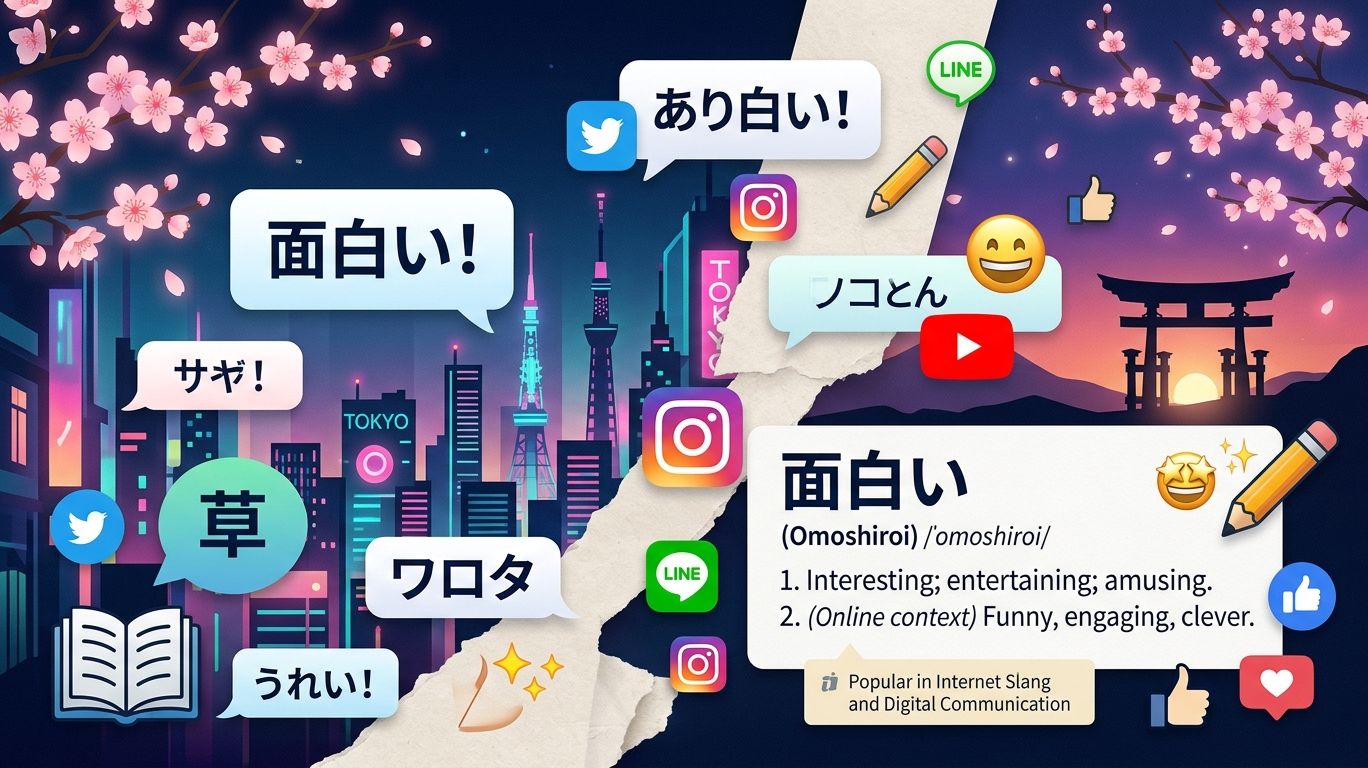
“Omoshiroi (面白い)” is a Japanese adjective meaning interesting, amusing, or engaging, used to describe something that captures attention or emotional interest.
In Japanese linguistics, omoshiroi functions as an evaluative adjective whose interpretation often depends on context, speaker intent, and social setting rather than a single fixed emotional meaning (Shibatani, 1990; Tsujimura, 2014).
In daily conversation, omoshiroi is used to describe something enjoyable, engaging, or mentally stimulating.
The word does not inherently express emotion like love or anger. Instead, it signals that something holds attention or provides entertainment value.
In NSFW or flirtatious conversations, omoshiroi does not become sexual by itself. Instead, its meaning shifts based on tone, timing, and relationship between speakers.
In these contexts, it can express:
For example:
Linguistics research on Japanese pragmatics highlights that indirect expressions are commonly used to maintain social harmony and avoid overly explicit statements, especially in emotionally sensitive contexts. Stanford Encyclopedia of Philosophy: Pragmatics
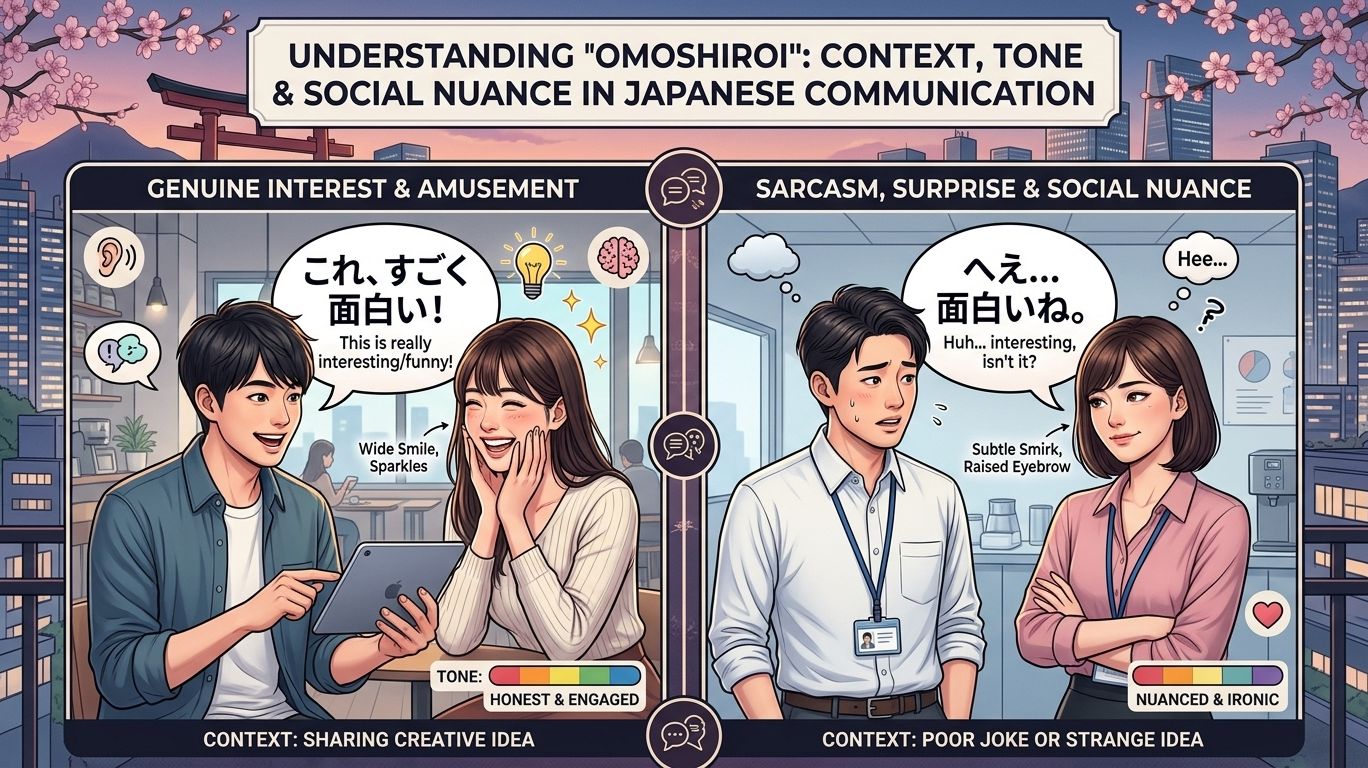
Japanese is frequently described as a high-context language, meaning speakers often rely on shared understanding, situational cues, and interpersonal relationships to convey meaning rather than stating everything explicitly (Hall, 1976).
Research in pragmatics shows that meaning is often shaped by:
As a result, words such as omoshiroi can express amusement, curiosity, engagement, or playful interest depending on the conversational context rather than their literal dictionary definition (Levinson, 1983).
In adult or flirt-style conversations, omoshiroi is often used as a soft response rather than direct praise.
It can signal:
Example situations:
It helps maintain:
The Japanese word omoshiroi is commonly translated as “interesting,” “amusing,” or “enjoyable.” Historical linguistic sources trace the term to older Japanese expressions associated with brightness, delight, and pleasurable experiences, which gradually developed into its modern meaning of something that captures attention or provides enjoyment (Digital Daijisen; Nihon Kokugo Daijiten).
This historical development reflects broader patterns in Japanese communication, where speakers often convey emotions indirectly through descriptive language rather than explicit emotional declarations.
|
Form |
Meaning | Usage |
|
Omoshiroi |
Interesting / fun |
Base form |
|
Omishiroi desu |
It is interesting |
Polite form |
|
Omishirokatta |
It was fun |
Past tense |
| Omoshirokunai | Not interesting |
Negative form |
In NSFW-adjacent conversations, positive forms are preferred because negative forms can feel blunt or dismissive.
Avoid these errors:
Because Japanese relies heavily on context, misuse often comes from ignoring social nuance rather than grammar mistakes.
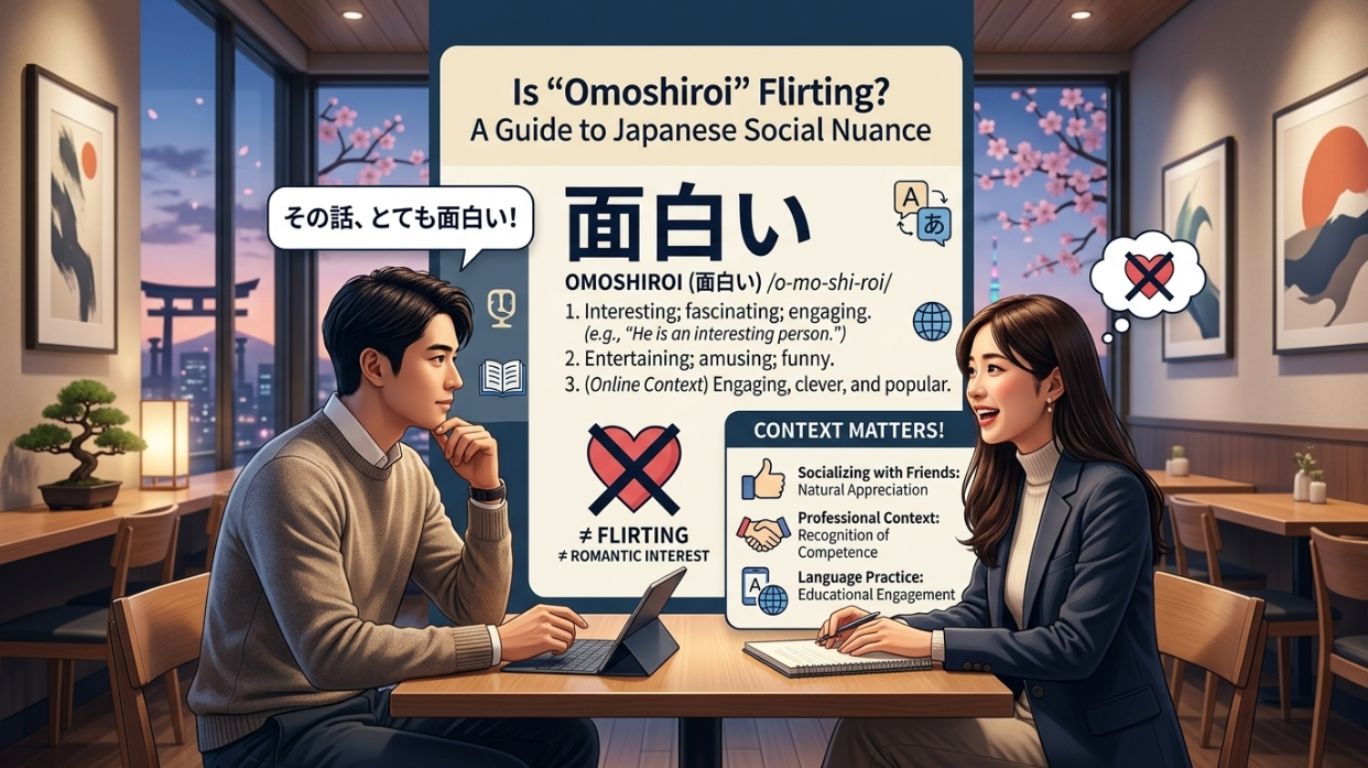
No. Omoshiroi is not a flirting word by definition.
However, in casual or intimate conversations, it can support flirtation by:
It is a supportive conversational tool, not a romantic declaration.
Omoshiroi is a flexible Japanese adjective that expresses interest, amusement, or engagement depending on context.
Its meaning is shaped more by tone and situation than literal translation, making it an important example of how Japanese communication relies on context and subtlety.
For those looking to experience Japanese-inspired NSFW interactions in a safe, immersive, and playful way, NewGirlfriend offers an experience where words like omoshiroi come alive in conversation, allowing you to engage, flirt, and enjoy content through various posts while emphasizing respect for cultural nuance.
No. It is a neutral adjective meaning “interesting” or “fun.” Any flirtatious meaning comes from context, not the word itself.
Yes, but only as a light, indirect expression of interest. It does not directly mean attraction.
“Omoshiroi” means interesting or fun, while “omoshirokunai” means not interesting or boring.
Hall, E. T. (1976). Beyond Culture. Anchor Books.
Levinson, S. C. (1983). Pragmatics. Cambridge University Press.
Shibatani, M. (1990). The Languages of Japan. Cambridge University Press.
Tsujimura, N. (2014). An Introduction to Japanese Linguistics (3rd ed.). Wiley-Blackwell.
Digital Daijisen Dictionary. Shogakukan. Entry: 面白い (omoshiroi).
Nihon Kokugo Daijiten. Shogakukan. Entry: 面白い (omoshiroi).
Stanford Encyclopedia of Philosophy. “Pragmatics.” Available at: https://plato.stanford.edu/
Encyclopaedia Britannica. “Pragmatics.” Available at: https://www.britannica.com/