

Incest is one of the most taboo subjects in society, often sparking heated debate when it comes up in law, pop culture, or the news. But beyond the stigma, many people wonder about the legal side of things, including the legal definition: Is incest illegal in the United States? The short answer is yes — but the details are more complex than you might think. Each state sets its own rules regarding state incest laws, particularly concerning incest laws. While incest is illegal and prohibited everywhere in some form, there are exceptions and gray areas that make the rules vary widely.
This article breaks down what incest legally means, how U.S. states handle incest laws, the penalties involved, and what exceptions exist.
Legally, incest refers to an incestuous relationship involving sexual relationships between close relatives, including blood relations. This includes parents and children, siblings, grandparents and grandchildren, and aunts or uncles with nieces or nephews. Some states also extend the definition to adoptive, step, and foster family members.
The taboo is deeply rooted in U.S. society, partly due to concerns about congenital disabilities. The U.S. Department of Justice even calls incest “the hidden crime,” estimating thousands of unreported cases of child molestation every year. Studies suggest that about 15% of U.S. families have reported an incident of sexual relations involving incest between 1980 and 2022, though only a fraction of cases reach law enforcement.
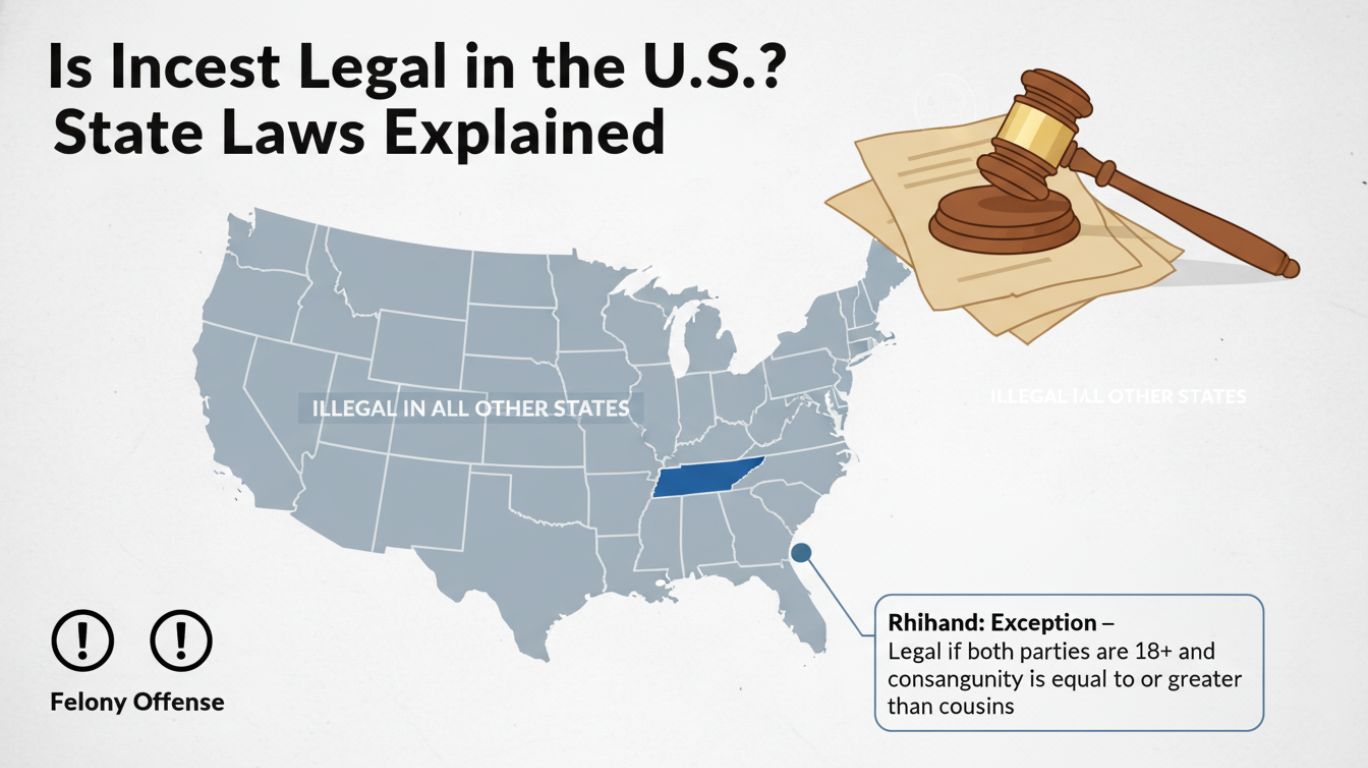
At the federal level, under criminal law, there are no nationwide incest laws. Instead, each state defines and enforces its own rules regarding criminal liability.
While these exceptions exist, the overall consensus is that incest remains a criminal offense across the country.
Penalties for incest can vary widely depending on the state, the relationship between the individuals, and whether minors are involved.
For example, in Texas, parent-child incest is considered a second-degree felony with penalties of 2 to 20 years in prison. Other forms of incest, such as between siblings, are third-degree felonies carrying up to 10 years behind bars.
There are two main reasons incest, classified as a sex crime, remains illegal across the U.S.:
While consanguineous marriages (marriages between blood relatives) are common in some cultures worldwide, U.S. marriage laws strongly discourage prohibited relationships that involve incest due to these risks.
For many survivors, including those dealing with childhood sexual abuse, it is not just a legal issue but also a deeply traumatic experience. Thankfully, there are national and local organizations dedicated to helping victims:
These resources are crucial for ensuring that survivors of sexual assault feel heard and protected throughout the legal process.
While defending against incest charges is extremely difficult and may result in a maximum sentence, some legal defenses may apply:
However, consent, age, or marriage are generally not valid defenses in incest cases, which often have a minimum sentence.
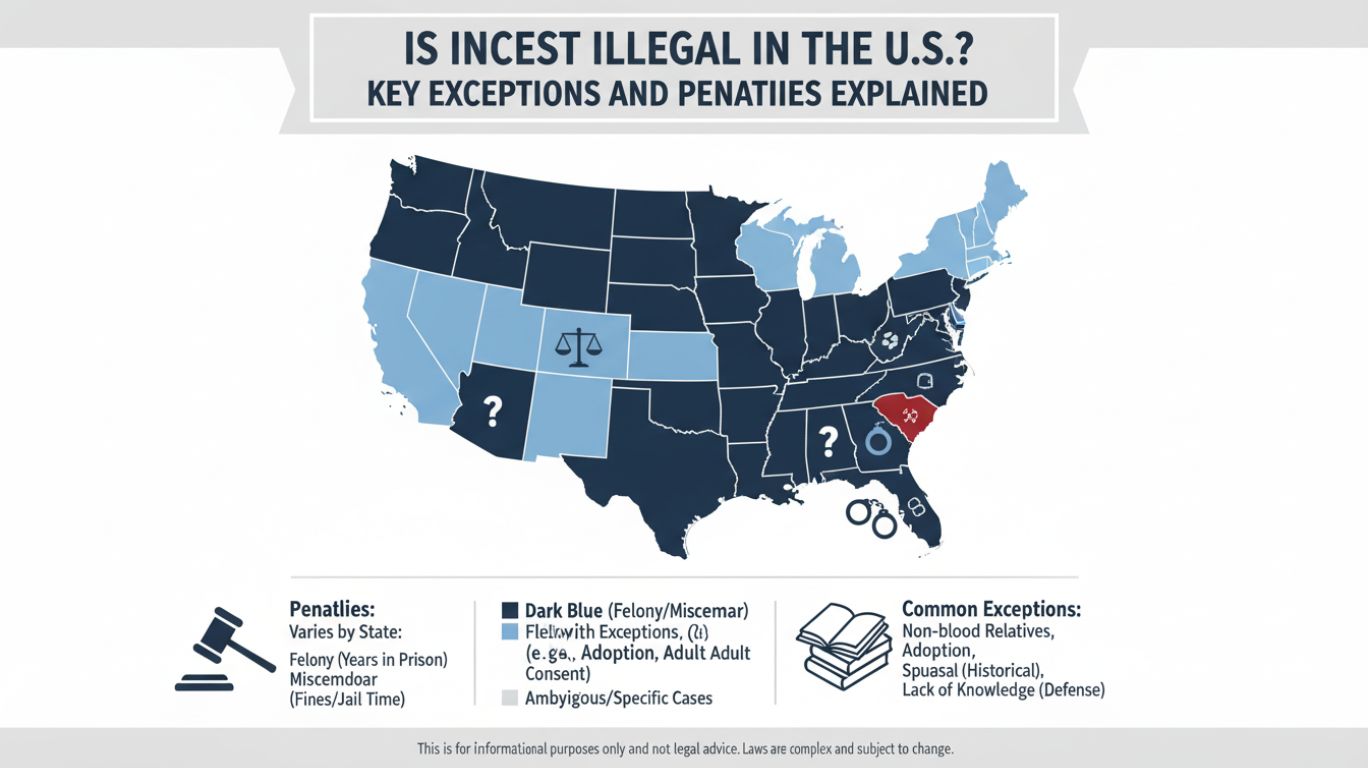
So, is incest illegal in the U.S.? Yes, but with essential exceptions concerning incest crimes. While every state criminalizes incest in some form, including prohibited degrees of relationships, the definitions, penalties, and exceptions vary widely. Some states allow consensual relationships involving incest between close relatives, but most do not. And when minors are involved, the law takes a strict and uncompromising stance.
Understanding these laws helps clarify a complex issue and highlights the importance of protecting families and supporting victims.
For more insights into complex and sensitive topics, including the rights of foster children, visit girlfriend.ai — where we learn real-world questions with clarity and care.