
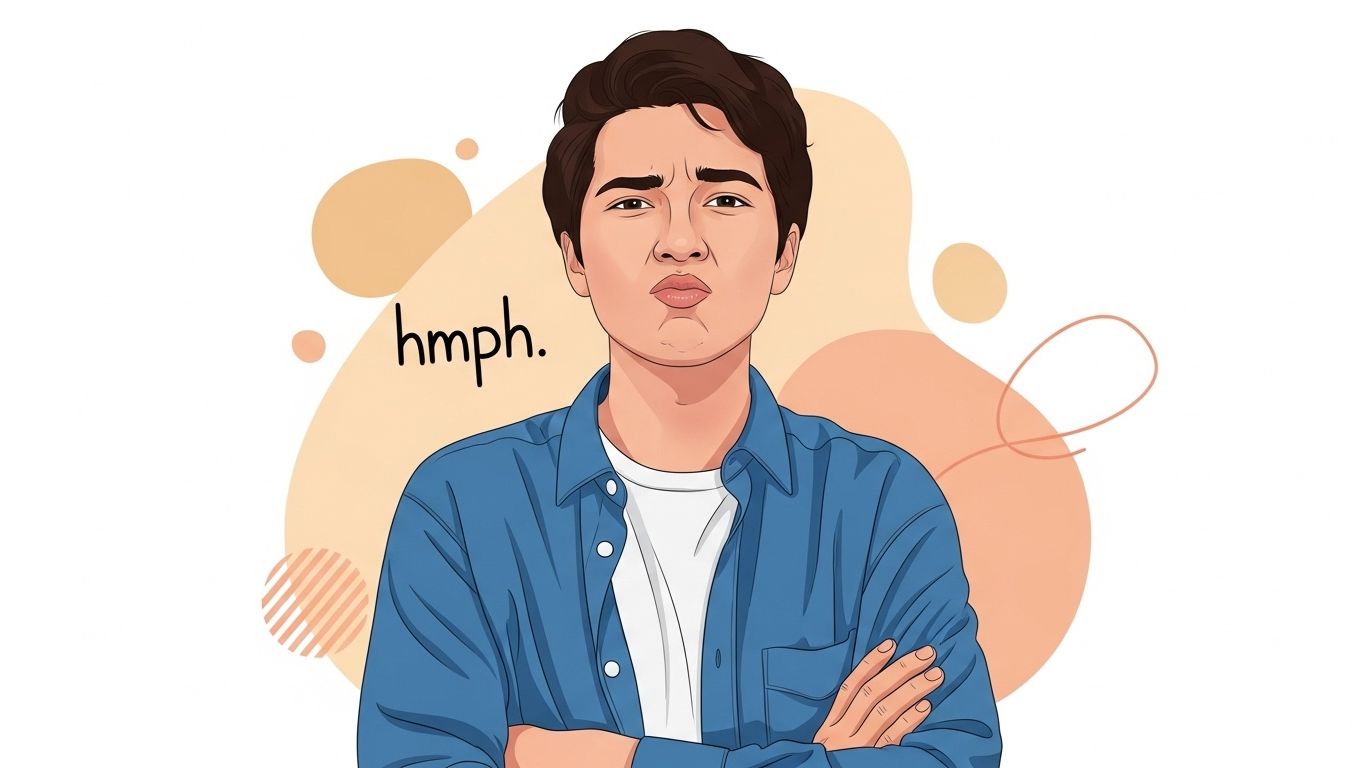
Ever heard someone go “hmph” when they’re annoyed or trying to make a point? It’s one of those short, sharp sounds that communicates more than a full sentence. Whether it’s a sigh of frustration, a pouty reaction, or a playful show of attitude, “hmph” has a language all its own.
“Hmph” is an interjection — a brief sound expressing emotion rather than literal meaning. It’s the written version of a huff or snort someone makes when they feel irritated, unimpressed, stubborn, or dismissive.
Picture someone crossing their arms after being told “no,” or someone scoffing when they disagree but don’t want to argue. That single “hmph” communicates the feeling instantly.
But not every “hmph” is negative. Sometimes it’s teasing, playful, or delivered with affectionate dramatic flair. In the right context, it can even come off as cute rather than annoyed.

Although “hmph” is short, it carries a wide range of emotional meanings depending on tone, situation, and personality. Here are the most common interpretations:
The most widespread meaning is frustration or mild anger. It appears when someone feels disappointed or when something doesn’t go their way.
Example:
“You forgot to call me.”
“Hmph.”
The displeasure is unmistakable — no extra explanation needed.
“Hmph” often appears when someone refuses to give in, admit they’re wrong, or back down.
Example:
“You know I’m right.”
“Hmph, maybe.”
It’s a safe way to disagree without escalating tension.
In friendly or flirtatious conversations, “hmph” can be used as a cute or exaggerated form of pretend annoyance.
Example:
“You ate the last cookie!”
“Hmph… fine, but you owe me.”
Here, it’s part of lighthearted back-and-forth, not genuine upset.
A sharper, more assertive “hmph” signals judgment or superiority.
Example:
“Did you see his new car?”
“Hmph, it’s nothing special.”
The tone shifts from irritation to mild arrogance.
In digital communication, where tone can easily get lost, sounds like “hmph” help clarify emotional context. Small variations can change the meaning significantly.
Common versions include:
Examples:
“You’re late again.” → “Hmph!”
“You said you’d message me first.” → “hmph…”
Length, punctuation, and capitalization all affect how the message comes across.
Though similar in spelling, the two serve very different emotional purposes.
Example:
“Hmm, that’s interesting.” → thoughtful
“Hmph, whatever.” → emotional reaction
They’re not interchangeable in tone or meaning.
“Hmph” appears in many cultures and forms of media because its meaning is so universally understood. The expression is often paired with recognizable gestures such as a pout, glance away, or upward nose tilt.
In anime, variations like “hm!” or “fuun” often signal a proud, irritated, or pouty character moment. In Western media, it frequently appears during comedic or dramatic reactions.
While the spelling may differ across languages, the sentiment remains recognizable: displeasure, stubbornness, or playful rejection.
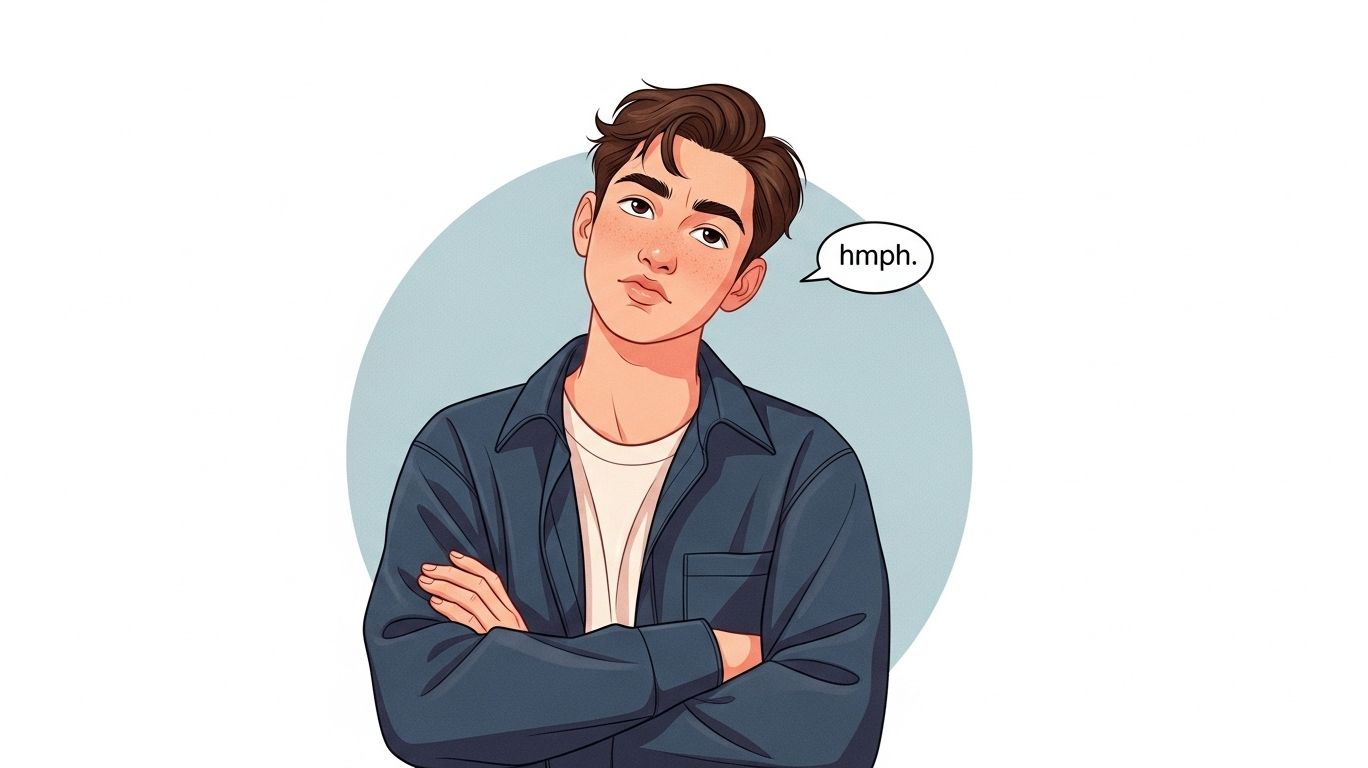
“Hmph” may be brief, but it expresses a surprising range of emotions — from mild irritation to playful teasing. Whether used in text or spoken aloud, it gives your feelings a voice without needing a full sentence.
Learn more about how tone and interjections affect online conversations in this guide to digital communication.
In texting, “hmph” usually signals annoyance, disappointment, or playful irritation. Depending on the mood and context, it can be serious or teasing.
It can be, especially when used in a dismissive or confrontational way. However, many people use it playfully, making it sound cute or casual rather than mean-spirited.
“Hmm” indicates thinking or curiosity, while “hmph” expresses emotion — often displeasure, stubbornness, or a pouty reaction.
It’s pronounced as a short huffing sound, similar to “hmmf,” usually made through the nose or with a slight exhale from the mouth.
Yes. In many conversations — especially online or between close friends — “hmph” is used as pretend annoyance or as a playful way to get attention.