
When it comes to music, creativity often pushes boundaries. Artists have long used lyrics to express the unfiltered truth, from raw emotions to controversial themes. However, with streaming services like Spotify, iTunes, and YouTube Music catering to global audiences of all ages, the term “explicit content warning” has become more relevant than ever.
If you’re an artist or music lover, understanding what explicit content means—and how it’s treated across different platforms—can help you avoid surprises and make smarter choices when sharing your work.
Explicit content in music typically includes lyrics or themes considered inappropriate for younger audiences. This could be strong language, including swear words, sexual references, graphic violence, or drug and alcohol mentions.
While some artists argue these subjects can be part of a discussion in educational or artistic ways, most platforms err on the side of caution, often adhering to the following criteria for explicit content. They aim to protect younger listeners and maintain a broad appeal across different age groups and cultures.
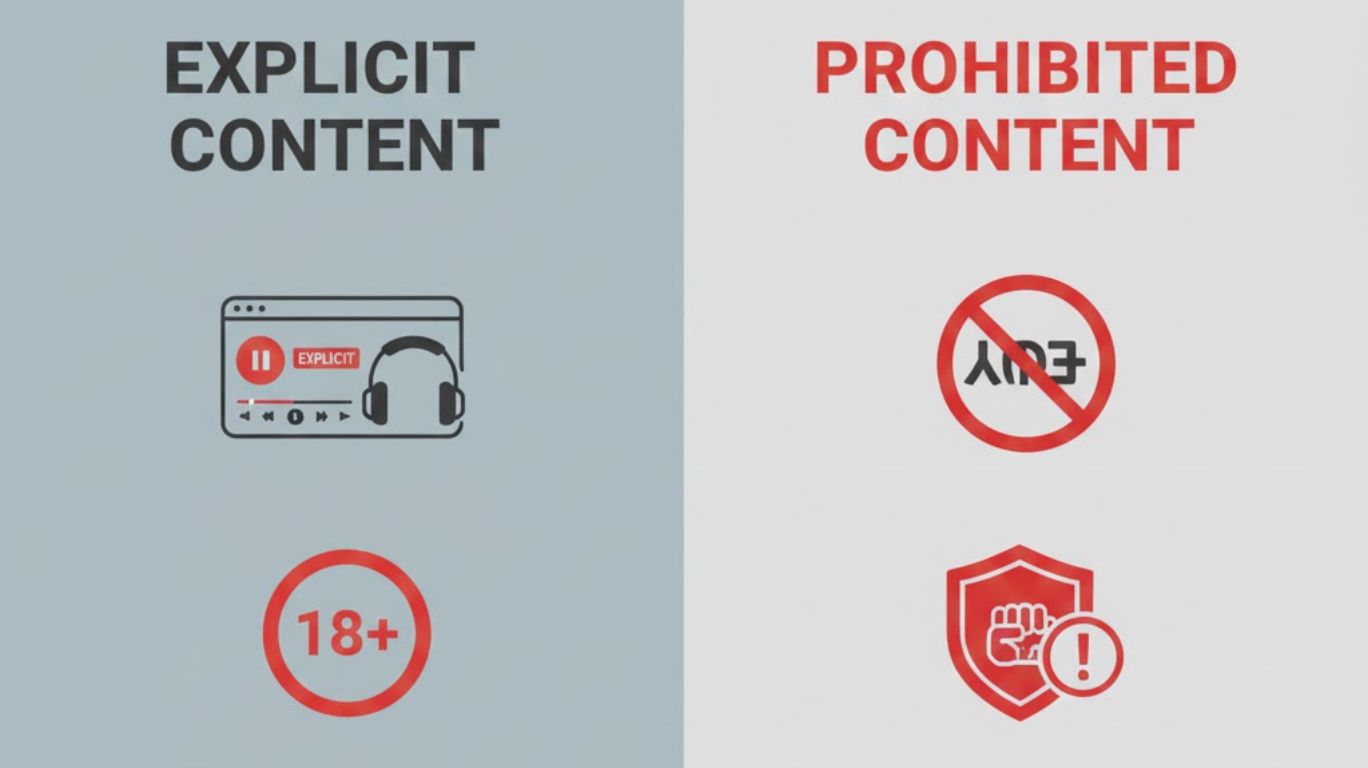
It’s important not to confuse explicit with prohibited content, and remember that content warnings may apply.
For example, a rap song with profanity may get flagged as explicit but still be available to listeners. However, a track promoting hate speech would likely result in account suspension.
Spotify defines explicit content as tracks with profanity, drug references, or sexual themes. Such songs are labeled with an “E” badge, or under parental advisory explicit content regulations, and listeners may need to confirm they’re over 18 to play them.
Apple Music uses parental advisory labels to mark explicit tracks. Compared to Spotify, the platform is more lenient—explicit songs are still available, but users must confirm they’re over 17 to download or stream.
YouTube Music takes a stricter approach. Beyond flagged lyrics, the overall tone and theme can determine whether a song is considered explicit.
SoundCloud offers more flexibility but relies heavily on creators to self-label explicit content. Offensive or NSFW material—such as swearing, nudity, or adult content references—should be tagged as explicit.
While explicit content isn’t banned, it can impact an artist’s reach and opportunities:
That said, explicit content can resonate more deeply with fans who appreciate raw authenticity. Some genres—like hip-hop or punk—may be challenging yet strengthen the artist’s identity.
Artists have a few options when it comes to handling explicit lyrics:
By understanding how explicit content is treated on each platform, artists can better balance creative freedom with commercial strategy.
Explicit content has always been a part of music—it’s a way for artists to express real emotions, learn raw themes, and connect with fans on a deeper level. But when distributing music on streaming platforms, knowing what qualifies as explicit depictions, how it’s labeled, and what the consequences are can make all the difference in effectively reaching your audience.
If you’re ready to learn more creative AI-driven conversations and insights, check out girlfriend.ai—a space where fun, imagination, and connection thrive. Newgirlfriend.ai offers many AI girls to choose from as well as free and paid versions of the site.
Explicit content usually involves swearing, sexual themes, drug references, or violent imagery. It’s flagged because such material may be unsuitable for children or general audiences.
No. Explicit content is allowed on most platforms but comes with warnings, labels, or age restrictions. Only prohibited content—such as hate speech or child exploitation—is banned.
Yes, to a degree. Being marked as explicit can reduce playlist placements, limit discoverability, and restrict younger listeners. However, many successful artists release explicit music and still achieve massive popularity.
Releasing both explicit and clean versions can be a smart move. It allows broader distribution on playlists and public spaces while giving users and fans access to the original version.
YouTube Music tends to be the most stringent, considering both the words and overall tone of the song. Spotify is also restrictive due to its playlist policies, while iTunes (Apple Music) and SoundCloud are more flexible.