
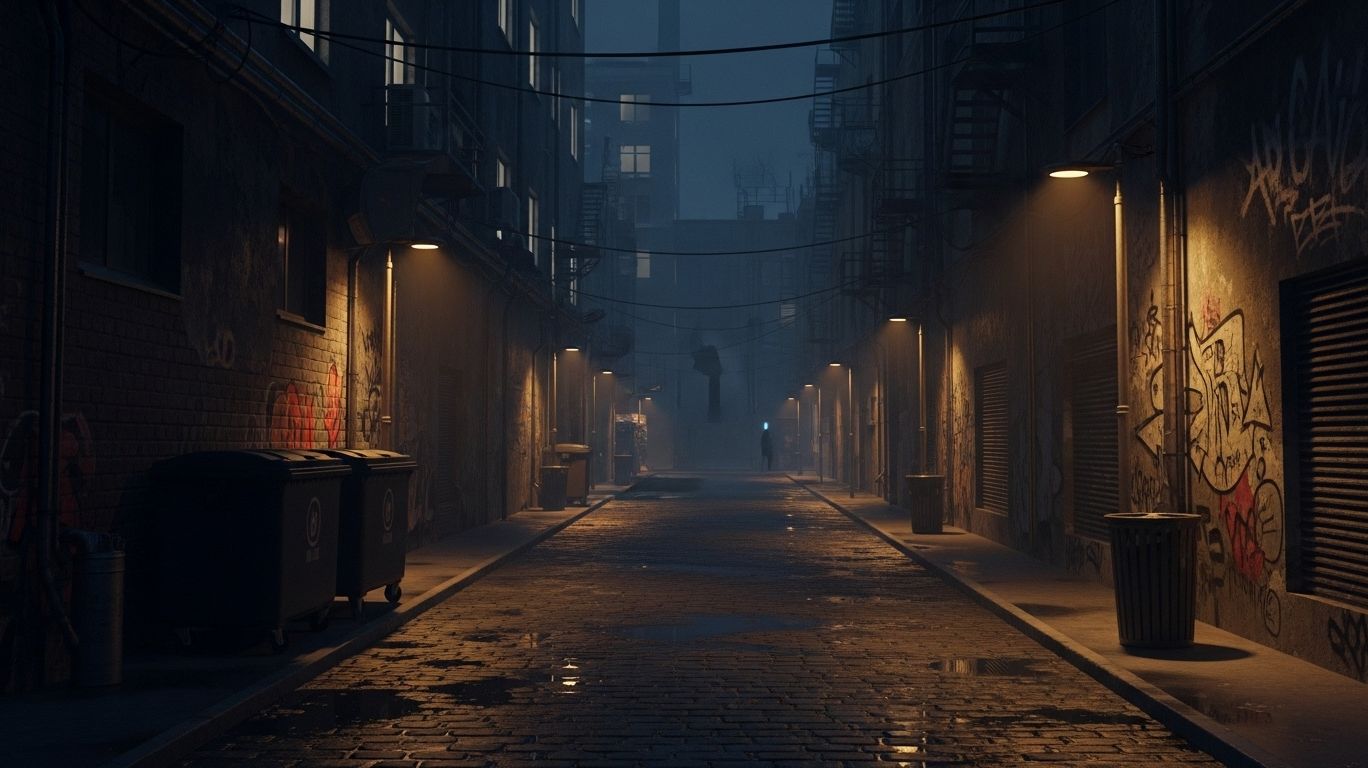
When you picture a dark alleyway, your imagination fills it with suspense. Maybe you think of crime dramas, shadowy figures lurking in the distance, or that uneasy feeling of being alone with your thoughts in the dark. For most of us, the absence of light equals the presence of danger.
But is that really true? As cities face rising energy costs and growing concerns about climate change, the role of streetlights is being questioned. Are they keeping us safe, or are they just giving us the comforting illusion of security while quietly draining resources and damaging the environment? Surprisingly, research shows that turning down the lights may not be as dangerous as we think.
Streetlights have long been considered an essential part of modern urban life. They guide late-night travelers, create a sense of order, and are believed to help prevent crime. Yet their hidden costs are immense.
Take New York State as an example for you. With 1.4 million municipal streetlights, the state burns through nearly a billion kilowatt-hours of electricity annually. That’s equivalent to the annual emissions of 144,000 passenger cars. The price tag? Over $60 million annually—to keep the lights on.
Multiply that by all 50 states, and the financial and environmental impact becomes staggering. Across the globe, cities are waking up to this reality and looking for ways to cut energy use without plunging residents into pitch-black streets.
Most people think of pollution as smoke in the sky or plastic in the ocean. But light can pollute too, and its effects ripple far beyond what we see.
Artificial lighting interrupts natural patterns that species depend on. Migratory birds, guided by the stars, lose their sense of direction when skies glow unnaturally bright. Insects, crucial for pollination, swarm around lamps until exhaustion. Bats, owls, and rodents avoid illuminated areas, disrupting their feeding habits.
Even at the shoreline, the glow of city lights misguides sea turtle hatchlings, pulling them inland instead of toward the ocean. The modern cityscape can be lethal for creatures that have survived for millions of years.
Reducing unnecessary lighting isn’t just about saving money—it’s about restoring balance to ecosystems that developed to thrive in darkness.
Here’s where things get tricky. The strongest argument for streetlights is safety. After all, criminals prefer shadows, right?
Recent research from England and Wales challenges that assumption. In areas where lights were dimmed, turned off during certain hours, or swapped for energy-efficient LEDs, crime rates did not spike. Burglaries, car thefts, and assaults didn’t increase as feared. In some cases, there was little to no measurable difference.
But the evidence isn’t one-sided. Earlier studies in the 1990s suggested that brighter lighting reduced crime by signaling community presence and discouraging would-be offenders. Later studies, however, found little correlation at all. The conclusion? The relationship between light and crime is not as clear-cut as many assume. Social conditions, policing, and community engagement may matter far more than whether a streetlamp is on.
Even if the numbers don’t show increased crime, people’s feelings tell another story. In a 2013 survey of over 15,000 people, 93 percent reported feeling safe in well-lit areas. In contrast, only 22 percent felt secure in poorly lit neighborhoods.
This highlights a key difference between actual and perceived safety. Humans are wired to associate darkness with risk—a survival instinct rooted in our evolutionary past. Predators lurked in the shadows for thousands of years, and firelight meant protection. Those instincts remain, even if the modern “predators” we fear are more often in our imagination than in reality.
This psychological link makes it difficult for cities to reduce lighting, even when the data suggests it’s safe. People want to feel comfortable walking at night, which often means bright streets, not dimmed ones.
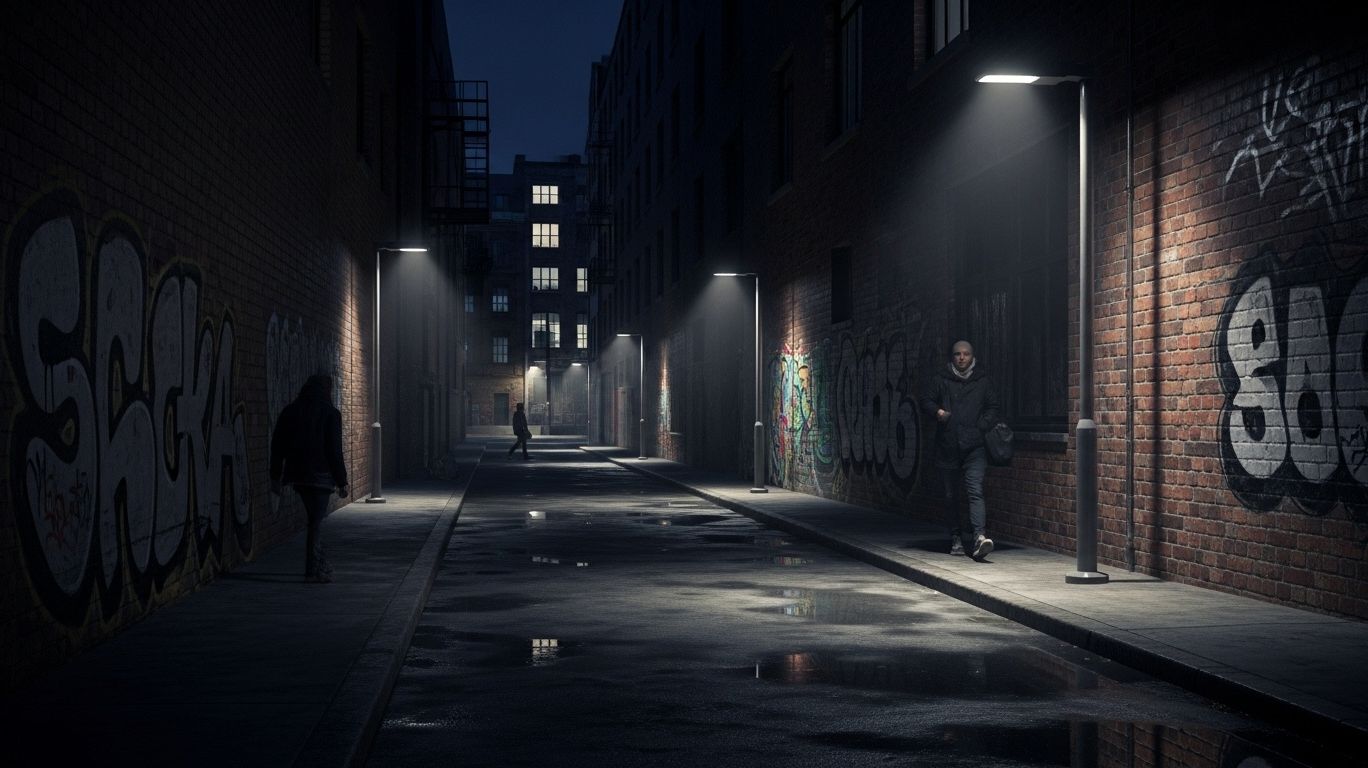
Instead of asking whether we should keep or cut streetlights, many cities are learning more innovative solutions. Los Angeles, for example, invested $57 million to convert 215,000 streetlights to LEDs, reducing energy use by nearly half and saving millions annually. Other places experiment with motion-activated lighting, where lamps brighten only when pedestrians or vehicles are nearby.
Some European towns dim lights after midnight in residential areas, saving energy while providing illumination where needed most. Technology allows cities to program lighting based on foot traffic, weather, or crime patterns, creating a tailored approach rather than a one-size-fits-all glow.
These innovations suggest we don’t need to choose between darkness and waste. Instead, we can design cities that respect human needs and environmental realities.
The dark alleyway may never escape its reputation as a setting for danger, but maybe it’s time to rethink what darkness means. Shadows don’t necessarily equal threats. In fact, a balance of light and dark might create safer, healthier cities overall—both for people and the planet.
Reducing unnecessary lighting can cut costs, lower emissions, and help wildlife thrive. At the same time, smarter technology can ensure people still feel safe when walking home at night. The future of city design may not be about banishing darkness entirely, but about embracing it wisely.
A dark alleyway might stir your imagination, but reality tells a more nuanced story. While comforting, streetlights are costly to the environment and government budgets. They don’t consistently deliver the crime prevention we assume, though they strongly influence how safe we feel. The challenge for modern cities is finding balance: saving energy and protecting nature while maintaining public confidence.
Darkness doesn’t have to be feared—it can be part of a brighter, more sustainable future. The next time you step into a dim street, remember: what feels unsafe isn’t always dangerous. Sometimes, it’s simply the night reminding us of its quiet power.
For more thought-provoking reads that challenge assumptions and spark curiosity, visit girlfriend.ai.