

Consensual non-consent (often shortened to CNC) is one of the most misunderstood concepts in modern sexuality. At first glance, the phrase itself can feel confusing or even alarming. How can something be “consensual” and “non-consensual” at the same time?
The confusion is understandable. CNC sits at a sensitive crossroads where fantasy, trust, communication, and consent all meet. When discussed without context, it can sound dangerous or contradictory. When understood properly, however, consensual non-consent refers to a carefully negotiated fantasy between consenting adults — one that relies heavily on communication, boundaries, and mutual respect.
To truly understand CNC, it is helpful to step back and clearly define what consent means, what non-consent actually entails, and how fantasy roleplay differs from real-world harm. With that foundation in place, the distinction between healthy roleplay and abuse becomes much clearer.
Sexual consent is the foundation of all healthy sexual interactions. At its core, consent is a clear, mutual agreement between partners to participate in a specific sexual activity.
Consent can be expressed verbally, such as saying “yes,” or through clear body language that shows enthusiasm and willingness. What matters most is that consent is:
One important point that often gets overlooked is that consent is not permanent. Agreeing to one activity does not mean agreeing to everything else. Consent must be ongoing and can change from moment to moment.
Silence, hesitation, or lack of resistance does not equal consent. When consent is ignored, assumed, or overridden, the act becomes non-consensual — and that can have serious emotional, psychological, and legal consequences.
Non-consent refers to any sexual activity that occurs without mutual agreement. This is not a gray area or a misunderstanding — it is a violation of personal autonomy.
Examples of non-consensual situations include:
These situations are forms of sexual violence or assault. They are not fantasies, not roleplay, and not excusable under any circumstances.
Understanding this distinction is crucial because consensual non-consent does not erase or minimize the seriousness of real non-consent. In fact, ethical CNC exists only because real non-consent is universally recognized as harmful and unacceptable.
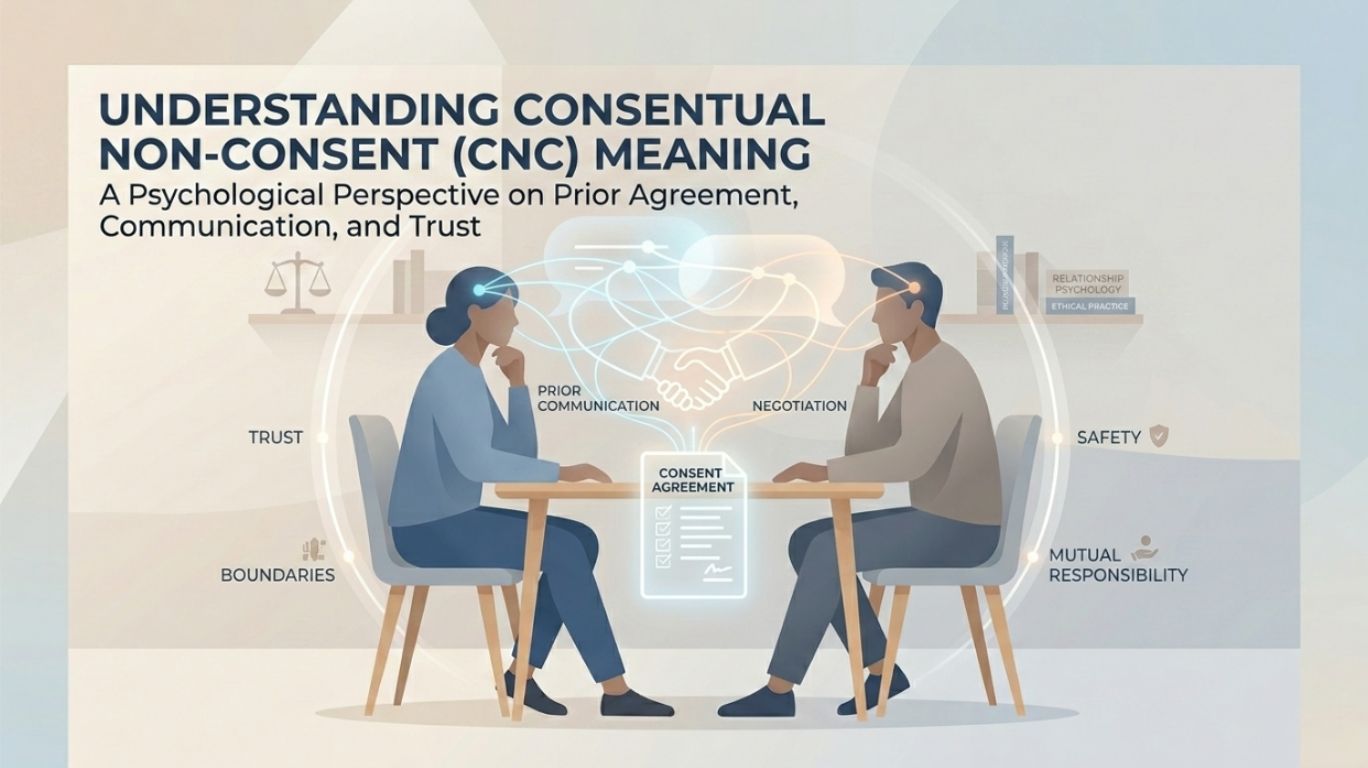
Consensual non-consent is a type of sexual roleplay in which all participants agree ahead of time to act out a scenario that appears non-consensual but is fully consensual behind the scenes.
This type of play is sometimes referred to as “CNC kink” or “rape play,” though many prefer the term CNC because it highlights the central role of consent.
What separates CNC from real non-consent is pre-negotiation.
Before any scene takes place, partners discuss:
Everyone involved is aware of what is happening and agrees to it in advance. Even when one partner says “no” or “stop” during the scene, those words are understood to be part of the roleplay, not an actual withdrawal of consent — unless a safe word is used.
At any point, consent can be revoked. When a safe word is spoken, everything stops immediately.
CNC is one of the most emotionally intense forms of roleplay. Because it mimics situations that are genuinely traumatic in real life, it requires an exceptionally high level of trust.
Clear communication before, during, and after the experience helps ensure that:
When handled responsibly, CNC can foster intimacy, deepen trust, and cultivate a sense of closeness between partners. When handled carelessly, it can cause confusion, emotional distress, or lasting harm.
Safety is not optional in CNC — it is essential. Without safeguards, CNC simply does not work.
Before anything begins, partners should talk openly about what is allowed and what is off-limits. This may include physical actions, verbal language, power dynamics, or specific scenarios.
Nothing should be assumed. Clear expectations help prevent misunderstandings and protect everyone involved.
Safe words are a non-negotiable part of CNC. Many people use a traffic-light system:
Safe words must be respected without question or delay.
Because CNC can be psychologically intense, both partners should honestly evaluate whether they are emotionally prepared. If there is unresolved trauma, uncertainty, or hesitation, CNC may not be appropriate.
Feeling pressured or unsure is a clear sign to stop and reconsider.
Aftercare refers to the time spent reconnecting after a scene. This may involve talking, cuddling, reassurance, or simply checking in emotionally.
Aftercare helps partners transition out of the fantasy and reinforces feelings of safety, care, and mutual respect.
CNC must always be mutually desired. If one person feels unsure, uncomfortable, or coerced into participating, it is no longer consensual.
Consent can be withdrawn at any time — before, during, or after the scene.
The difference between consensual non-consent and real non-consent comes down to choice and control.
In CNC, everyone involved knows they are safe and can stop the process at any time. In real non-consent, there is no safety, no agreement, and no control.
Understanding this distinction helps protect both personal boundaries and the broader conversation around consent.

Consensual non-consent is a complex and deeply personal form of sexual expression. When practiced responsibly, it is built on trust, communication, and mutual respect. When practiced without those foundations, it stops being a fantasy and becomes a harmful practice.
Clear consent, firm boundaries, emotional awareness, and aftercare are what separate ethical CNC from abuse. These elements are not optional — they are essential.
For those interested in learning intimacy, communication, or fantasy in a safe and judgment-free environment, meaningful conversations can begin in many ways. Open-minded AI companions at girlfriend.ai offer a space to study connection, curiosity, and communication at a comfortable pace.
Consensual non-consent refers to a pre-negotiated roleplay scenario in which participants agree to act out a situation that appears non-consensual. Despite the name, CNC is entirely based on consent, trust, and communication, often within the BDSM community.
No. Sexual assault involves a lack of consent and causes harm. CNC involves explicit permission given in advance, along with safety measures such as safe words and boundaries. Without consent, CNC becomes abuse — but when consent is present, it is a fantasy, not assault.
Safety comes from preparation and communication. Partners discuss limits, agree on safe words, check emotional readiness, and engage in aftercare afterward. These steps help ensure the experience remains consensual and emotionally healthy.