

Searching for cheap cigarettes usually means one thing: prices feel too high. Tobacco costs have climbed sharply in many countries due to taxes, regulations, and public-health policies.
Cheap cigarettes do exist—but low prices rarely happen by accident. Governments, tobacco companies, and local economic policies all influence what smokers pay at the counter.
Understanding why cigarettes are cheaper in some places helps explain price differences, industry strategies, and the long-term costs behind tobacco affordability.
Cigarettes cost less in some countries because tobacco taxes remain low or increase slowly.
Governments often raise cigarette taxes to reduce smoking. Higher prices discourage new smokers and push existing smokers to quit. Public-health experts consistently find that price increases reduce tobacco use, particularly among younger people. According to the World Health Organization, higher tobacco taxes represent one of the most effective tools to lower smoking rates.
Authoritative source:
https://www.who.int/news-room/fact-sheets/detail/tobacco
Countries with weaker tobacco taxes tend to maintain cheaper cigarettes. Governments sometimes protect local tobacco farming or manufacturing industries, which keeps prices lower.
Domestic production also reduces costs. When cigarettes are produced locally rather than imported, manufacturers avoid shipping costs and import duties.
Below is a simplified comparison showing how taxes influence cigarette prices.
|
Country |
Average Pack Price | Tobacco Tax Share | Resulting Market Trend |
|
United States |
$6–$12 | High | Lower smoking rates over time |
|
Australia |
$25+ | Very high |
Some of the world’s highest prices |
| China | $2–$5 | Moderate |
High national smoking rates |
| Indonesia | $1–$3 | Low |
Smoking remains common |
High taxes usually mean higher cigarette prices and fewer smokers. Lower taxes produce the opposite effect.
Research from the Centers for Disease Control and Prevention confirms that increasing cigarette prices reduces tobacco consumption, especially among youth.
Source: https://www.cdc.gov/tobacco/data_statistics/fact_sheets/economics/econ_facts/index.htm
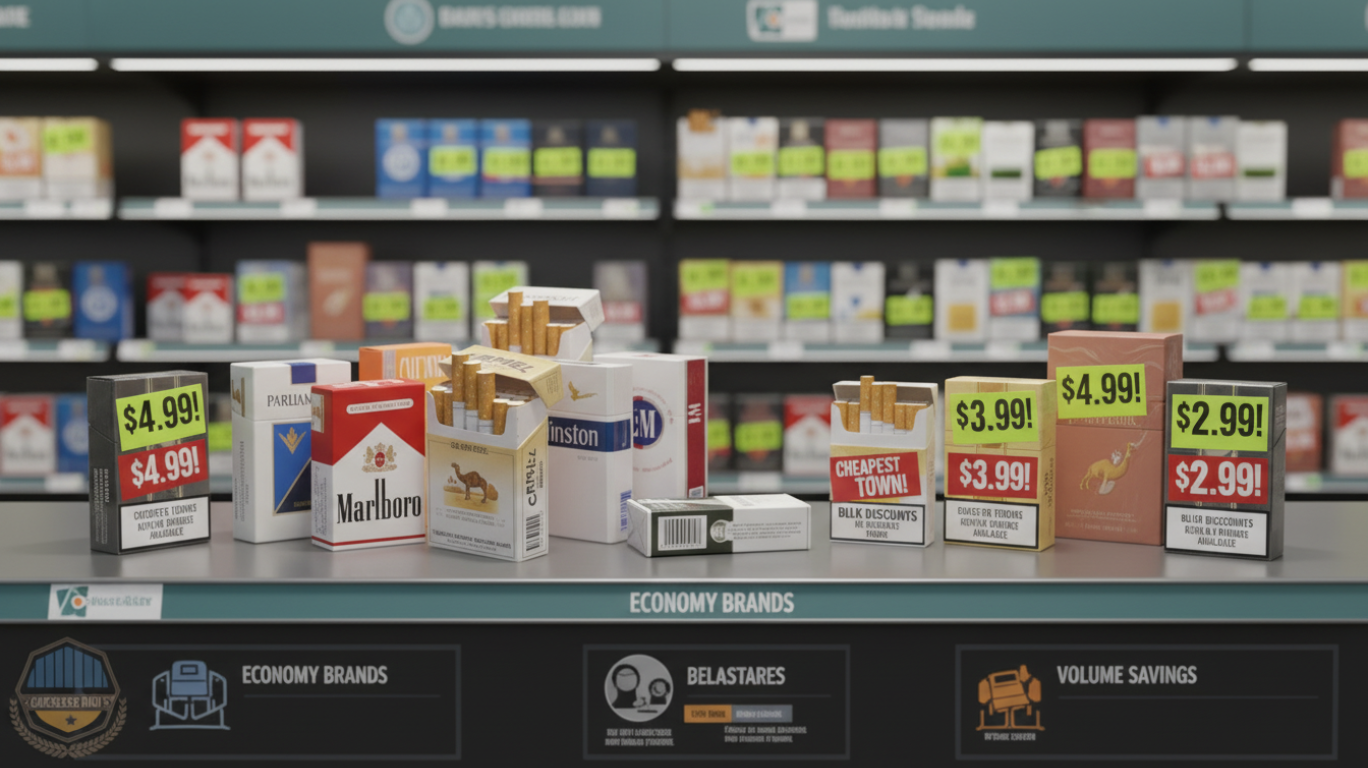
Tobacco companies actively work to keep cigarette prices within reach of consumers.
When governments raise taxes, manufacturers often respond with price-smoothing strategies. These tactics prevent sudden price increases that might push smokers to quit.
Common strategies include:
For example, companies behind brands such as Marlboro and Camel adjust pricing tiers to offer cheaper options that retain customers.
This approach protects overall sales volume.
Academic research published in National Institutes of Health shows tobacco companies use complex pricing strategies to offset tax increases and maintain demand.
Source: https://www.ncbi.nlm.nih.gov/pmc/articles/PMC3228562/
Taxes raise prices, but tobacco companies use pricing strategies to reduce the cost impact.
Cheap cigarettes often lead to higher smoking rates and greater long-term health damage.
When tobacco becomes more affordable, people smoke more frequently. Lower prices also make it easier for teenagers and young adults to start smoking.
Health researchers consistently link smoking with severe diseases, including:
The World Health Organization estimates that tobacco kills more than 8 million people each year worldwide.
Source: https://www.who.int/news-room/fact-sheets/detail/tobacco
Cheap cigarettes can also increase economic pressure on healthcare systems. Governments often spend billions treating smoking-related illnesses.
A report from the World Bank shows that tobacco-related healthcare costs and lost productivity far exceed tax revenue in many countries.
Source: https://www.worldbank.org/en/topic/tobacco
Lower cigarette prices therefore shift costs from the store counter to public health systems and families.
Cheap cigarettes remain controversial because affordability directly affects smoking behavior.
Public-health organizations argue that higher prices help reduce smoking. Tobacco companies argue that excessive taxes encourage black markets and illegal sales.
This tension explains why tobacco policy evolves slowly.
Governments with financial stakes in tobacco industries often resist price increases. China provides one example because its tobacco sector operates under a state-controlled monopoly.
Studies examining tobacco control policies show that industry influence can delay stronger regulation.
Research published through the World Health Organization highlights how the WHO Framework Convention on Tobacco Control attempts to limit industry interference in national policy decisions.
Source: https://fctc.who.int
Even with global agreements, implementation varies widely from country to country.

People searching for cheap cigarettes usually want to reduce spending.
However, switching to cessation tools or nicotine alternatives often produces better long-term results.
Common alternatives include:
These options fall under nicotine replacement therapy (NRT). According to the U.S. Food and Drug Administration reports that NRT products may help many smokers reduce withdrawal symptoms during quit attempts.
Source: https://www.fda.gov/tobacco-products/products-ingredients-components/nicotine-replacement-therapy
The key reason they work: they separate nicotine from the harmful chemicals created by burning tobacco.
That distinction makes quitting more manageable while lowering health risks.
Cheap cigarettes exist because of tax policy, industry strategy, and local economic priorities.
Lower prices may save money in the short term, but they often encourage higher smoking rates and greater health risks.
Understanding the forces behind cigarette pricing—government regulation, corporate tactics, and public health goals—provides a clearer view of why tobacco affordability remains a global issue.
Readers who research cigarette prices should look beyond cost alone. The policies that shape affordability also shape long-term health outcomes.
Visit girlfriend.ai for more insights and helpful content.