Chat bot AI, along with generative AI and natural language processing, is no longer science fiction — it’s a tool millions use every day to get answers, brainstorm ideas, automate tasks, and even roleplay. Whether you’re curious about how these systems work or want practical tips for getting better results, this guide breaks it down in plain English, including verification, so you can start using chatbot AI confidently.
Key takeaways
- Chatbot AI is a programs that use machine learning to understand text and generate human-like responses.
- They’re useful for customer support, creative work, coding help, summarization, and more.
- You get better results by writing clear prompts, giving context, and iterating on the bot’s output.
- Chatbots have limits — they can hallucinate, be biased, and raise privacy concerns — so verify important facts.
- Use chatbots as assistants, not authorities: treat their output as a helpful draft or starting point.
What is a Chat Bot AI?
A chat bot AI (often called an AI chatbot or virtual agents) is a software system designed to converse with humans using natural language. While basic chatbots follow simple scripts, advanced agents combine conversational AI with automation to perform complex tasks and act directly on user requests.
Instead of clicking through menus or reading long articles, you type (or speak) a question in human language and the chatbot replies in real time. Modern chatbots are powered by large language models — machine learning systems trained on vast amounts of text — which let them generate fluent, context-aware responses.
How Chat Bot AI works (in plain English)

You don’t need a PhD to understand the basics. At a high level:
- Training: Researchers train neural networks by feeding massive datasets of textbooks, articles, conversations into the model. The model learns patterns: how words fit together, how ideas are explained, and what answers often follow certain questions.
- Generation: When you type a prompt, the chatbot uses what it learned to predict the most likely next words and assembles them into sentences. The result is a response that matches the tone and structure of human writing.
- Fine-tuning and feedback: Many chatbots are fine-tuned with additional examples or corrected with reinforcement techniques so they follow instructions better and avoid unsafe outputs. Developers play a key role in refining chatbot performance during this process.
- Iteration: If the answer isn’t right, you can provide feedback or more context. The model can adjust the next reply based on the latest message in the conversation.
That’s the simplified pipeline: learn patterns → predict language → refine with feedback. The magic is in the scale; larger models trained on more data tend to produce more coherent, useful responses.
The Benefits of Chat Bot AI for Businesses and Users
Chat Bot AI has transformed the landscape of customer interactions, offering significant benefits for both businesses and their customers. By deploying generative AI chatbots, companies can automate a wide range of customer conversations, allowing human agents to focus on more complex or sensitive issues. This not only boosts operational efficiency but also ensures that customers receive prompt, accurate responses to their queries at any time of day.
With the power of natural language processing (NLP) and machine learning, AI chatbots can understand and respond to user queries in a way that feels natural and intuitive. This leads to smoother customer experiences, as chatbots can quickly resolve common issues, provide product recommendations, or guide users through services without the need for manual intervention. The ability to analyze chat history and user interactions also gives businesses valuable data-driven insights, helping them refine their support strategies and deliver more personalized experiences.
Common Uses — Practical Examples of Conversational AI
Chat bot AI fits into many everyday workflows for the user. Here are common ways people use them:
- Integration with apps for real-time assistance. Chat bot AI can be embedded in various apps, such as messaging platforms and customer service portals, to provide instant support and automate workflows.
- Quick answers and research help. Ask for a plain-language explanation of a concept, a summary of a long text, or step-by-step help for solving a problem. Chatbots can also help solve specific problems or challenges.
- Writing and editing. Draft emails, blog posts, social posts, product descriptions, or creative stories. Use the bot to expand outlines, tighten prose, or highlight product features in descriptions.
- Programming assistance. Get code snippets, debugging hints, or explanations of algorithms. Chatbots can help translate pseudo-code into a working example.
- Creative tasks. Generate story ideas, roleplay characters, compose song lyrics, craft prompts for image generators, or create new content and ideas.
- Routine automation. Produce templates (invoices, meeting notes), generate meta tags, summarize calls, translate text between languages, or manage and upload a file.
- Customer service and chat interfaces. Many businesses embed chatbots to answer common customer questions, automatically answer questions, triage requests, and escalate complex issues to humans.
These are just starting points — the versatility of chat bot AI means people keep finding new and practical uses.
How to Get Better Customer Conversations: Prompting and best practices
A chatbot’s usefulness depends greatly on how you manage user interactions and interact with it. Small improvements in your prompts can yield much better output.
- Be specific. Instead of “Help me write a product description,” try: “Write a 120-word product description for a compact espresso maker targeted at apartment renters. Emphasize ease of cleaning and energy efficiency.”
- Provide context. If you want consistent tone or format, include examples or a short brief (audience, purpose, length).
- Ask for structure. Request bullet lists, outlines, step-by-step instructions, or short summaries when helpful.
- Iterate. If the first answer isn’t perfect, tell the bot what to change: “Make the tone more casual,” or “Shorten to three bullet points.”
- Use constraints. Word limits, style notes (e.g., “use US English”), or required keywords help the model produce usable text.
- Chain tasks. Break complex jobs into smaller steps — outline first, then expand each section — to keep the conversation focused.
Treat the bot as an assistant: direct it clearly, refine its drafts, and combine its strengths with your judgment.
Generative AI Chatbots: Limitations, Safety, and Privacy
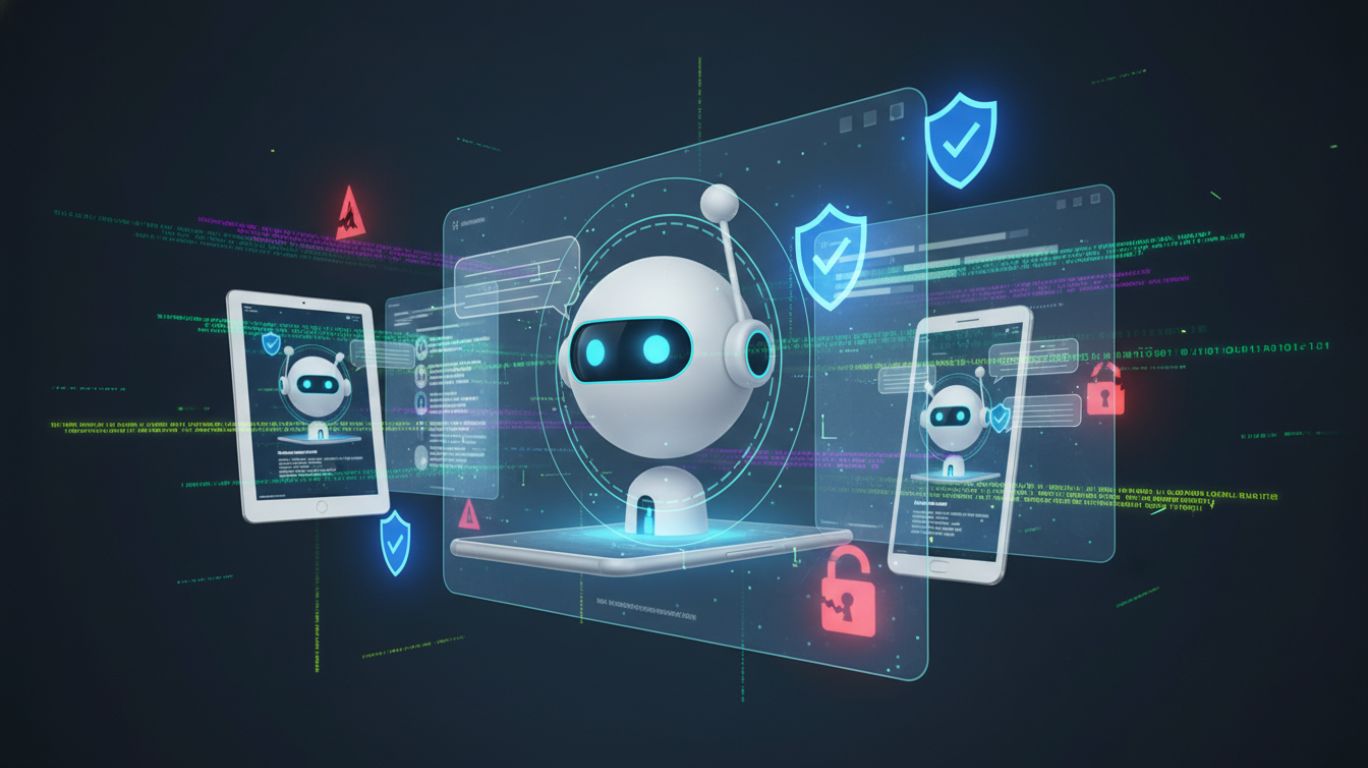
Chat bot AI is a powerful solution for automating responses and improving efficiency, but it is imperfect—verification is crucial. Advanced gen ai models, while capable of extracting and fine-tuning question-and-answer datasets for customer self-service, can still present risks and limitations. Keep these caveats in mind:
- Hallucinations. Models can produce plausible-sounding but incorrect information. Always verify facts that matter (legal, medical, financial).
- Bias and fairness. Training data can include biased viewpoints. Watch for biased language or unfair generalizations and correct them.
- Privacy. Don’t share sensitive personal data in chats unless you trust the service’s data handling and retention policies.
- Dependence. If you rely solely on a bot for judgment calls or final decisions, it is risky—use it to speed work, not replace critical thinking.
- Content policies. Some tools restrict certain content types and will refuse or redact requests; be aware of those limits.
By understanding these boundaries, you can get the most value from this solution while avoiding common pitfalls.
Conclusion: How to Use It Effectively with Operational Efficiency
Chat bot AI can act as a first point of contact or assistant in various scenarios, especially in contact centers. It is a practical, creative, and increasingly essential tool that can save time, spark ideas, and help you communicate more effectively. Whether you’re using it for work, study, or fun, remember to be specific, iterate, and verify important outputs. When used responsibly, chatbots amplify what people can do — they’re assistants that handle the heavy lifting so you can focus on judgment and creativity.
Ready to try a chatbot designed for conversations and companionship? Visit girlfriend.ai to learn conversational AI built with empathy and personality, and see how chatbots can be integrated into your website to enhance user engagement. Newgirlfriend.ai offers many AI companions to choose from as well as free and paid versions of the site.